Photo collection: Public seating
What a seat says about who is expected. From tables that keep a place open, to benches that close the circle, to seating built so that no one stays.
-
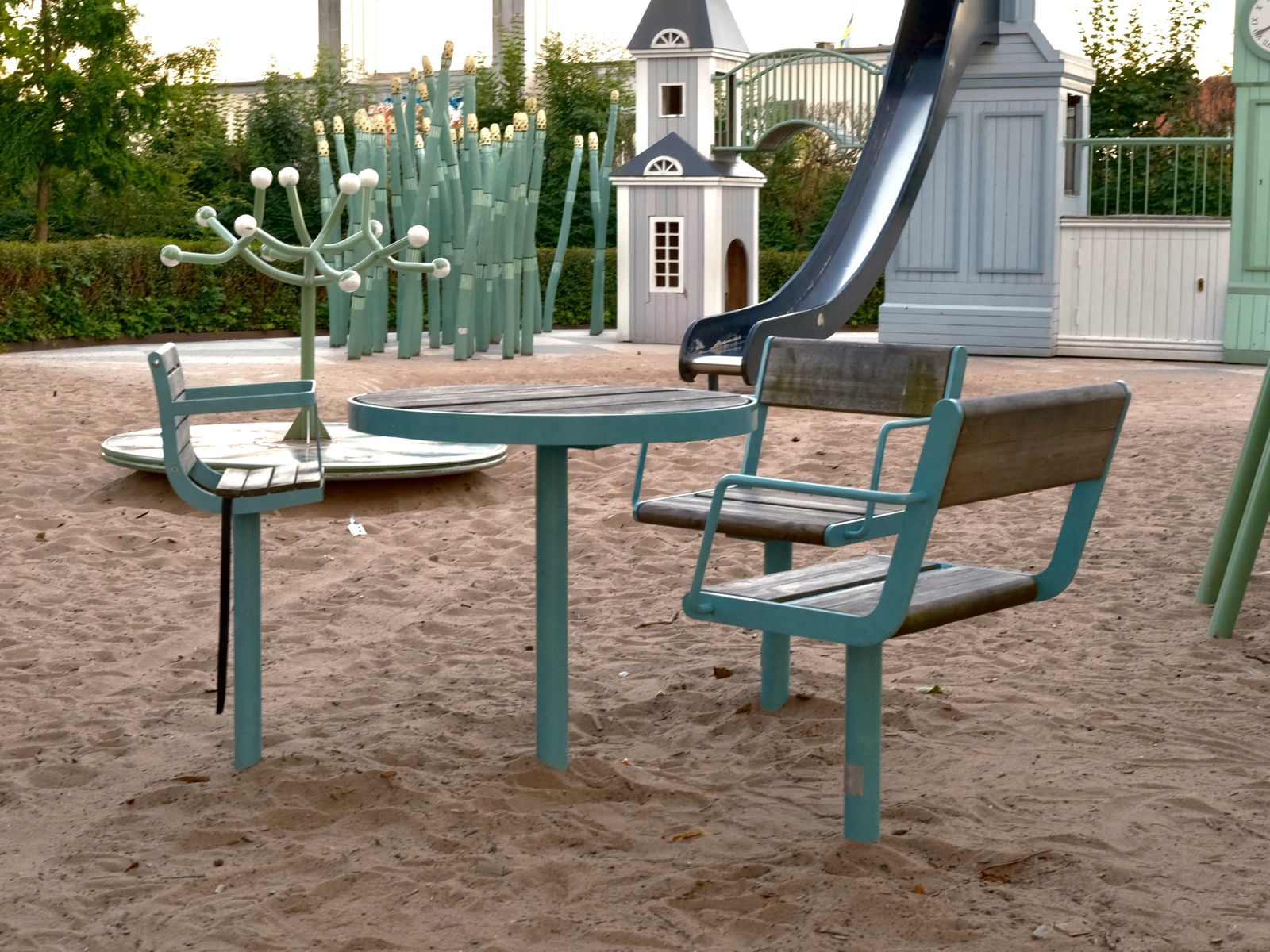
Växjö. Three chairs, one of them for a baby, and a fourth place left open. Nothing is attached to the table, so a wheelchair, a pram, or another chair rolls straight in. Download photo -
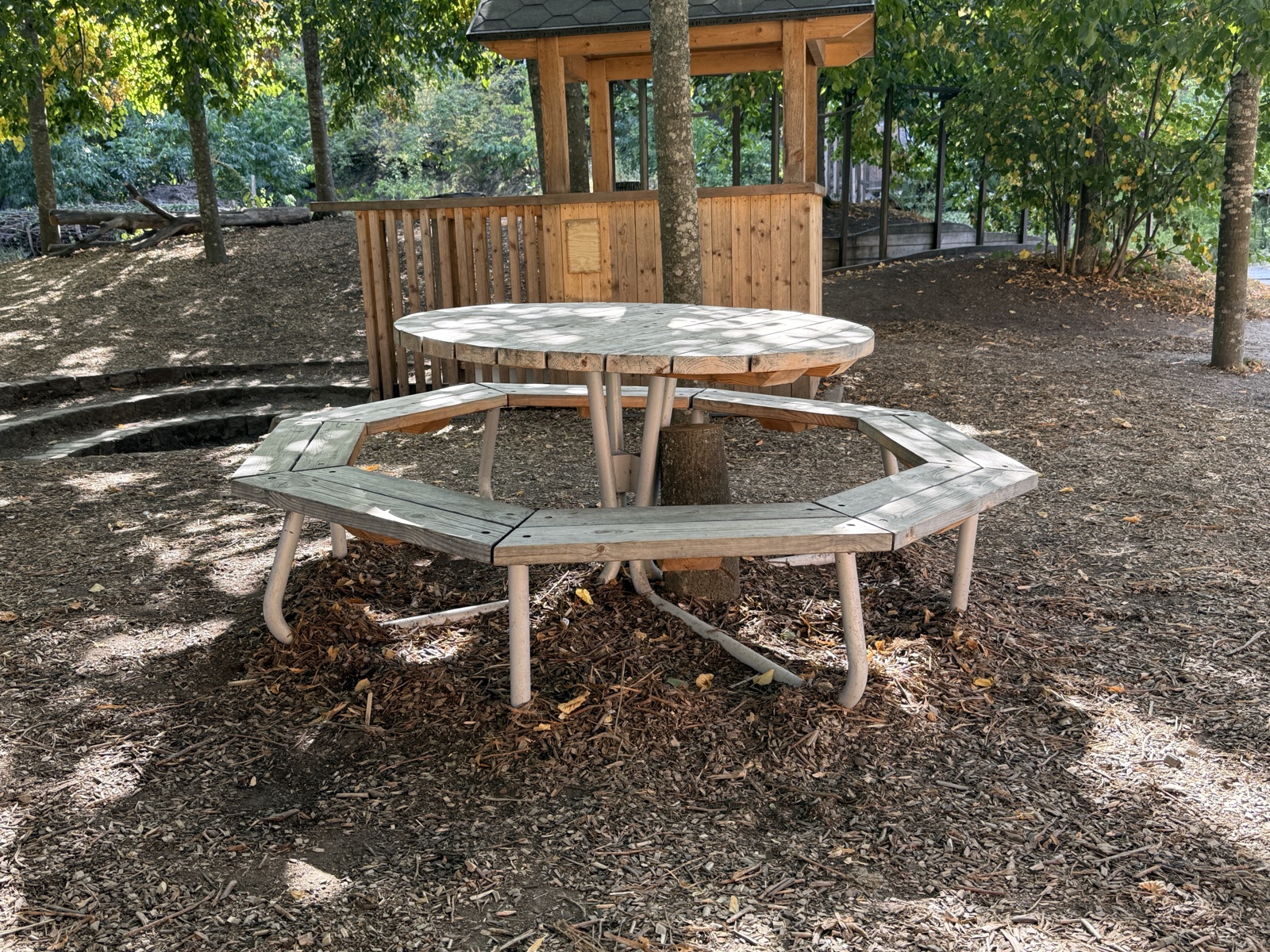
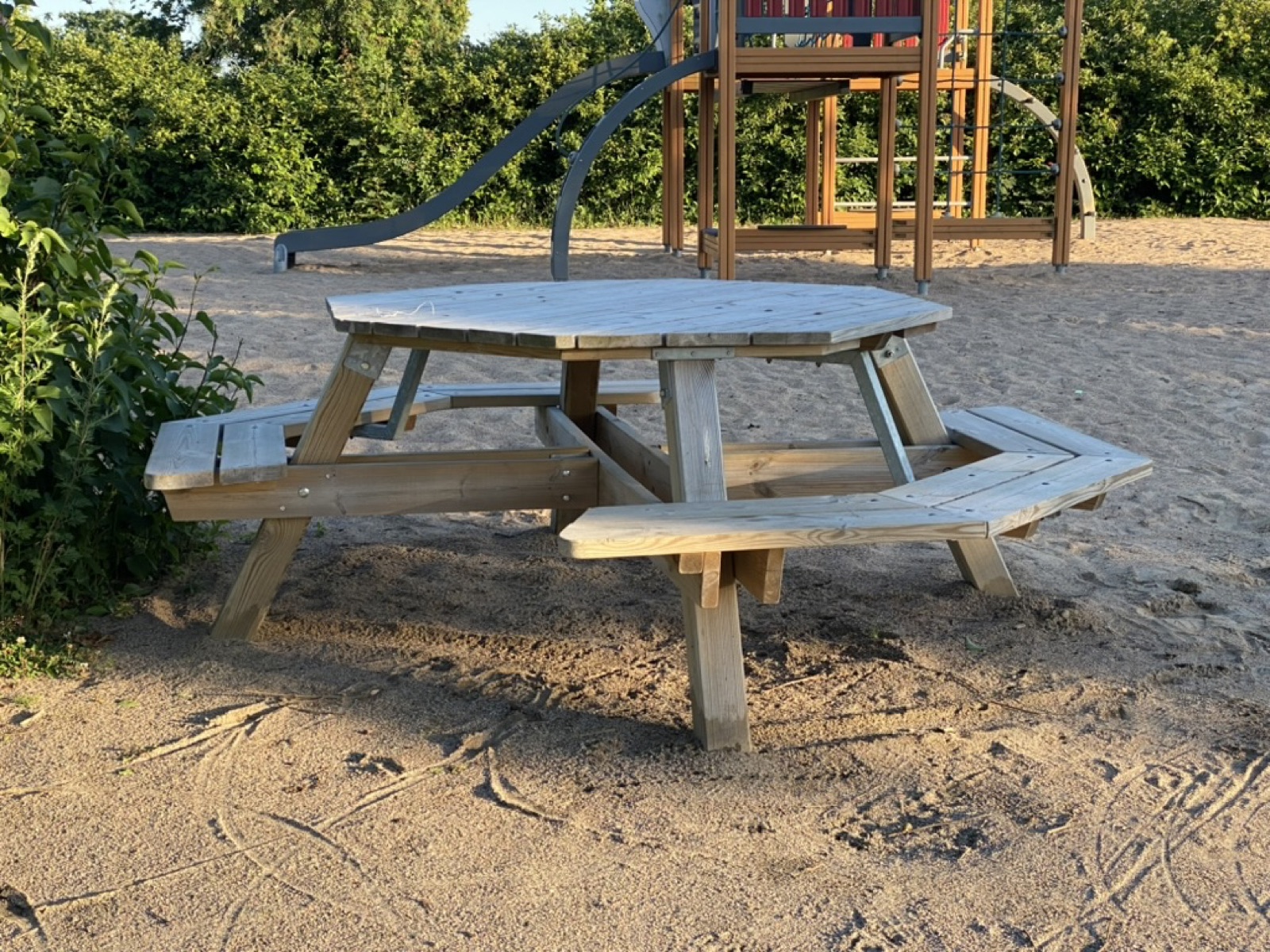
A closed circle. The bench rings the table without a gap, so reaching a seat means stepping over it. Download photo -
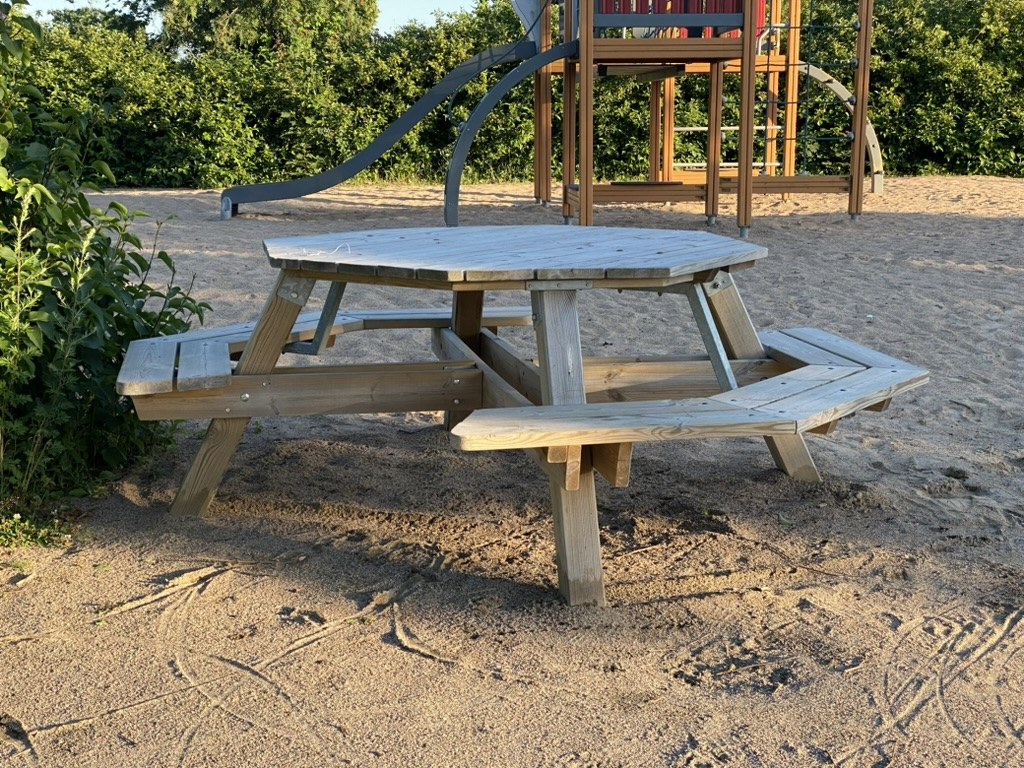
A round table with gaps cut between the bench sections. Anyone on wheels rolls in among the seats, no special place marked. Table by KPLN Design AB. Download photo -
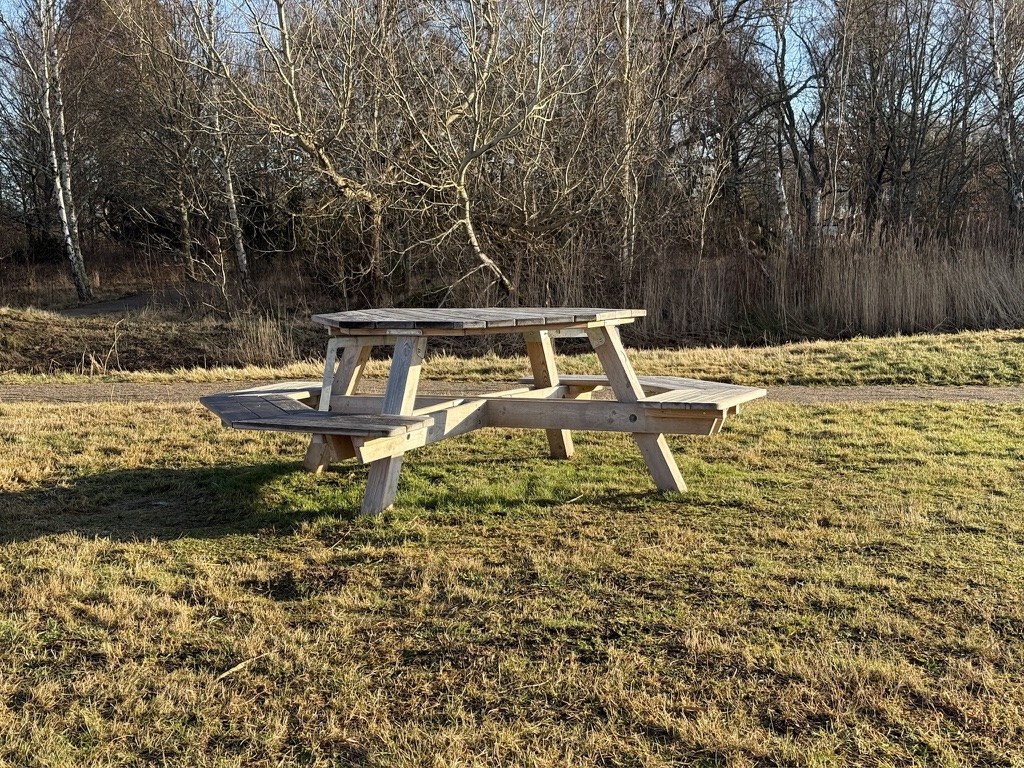
A round table in a park, with gaps cut between the bench sections. The open places work just as well on grass. Table by KPLN Design AB. Download photo -
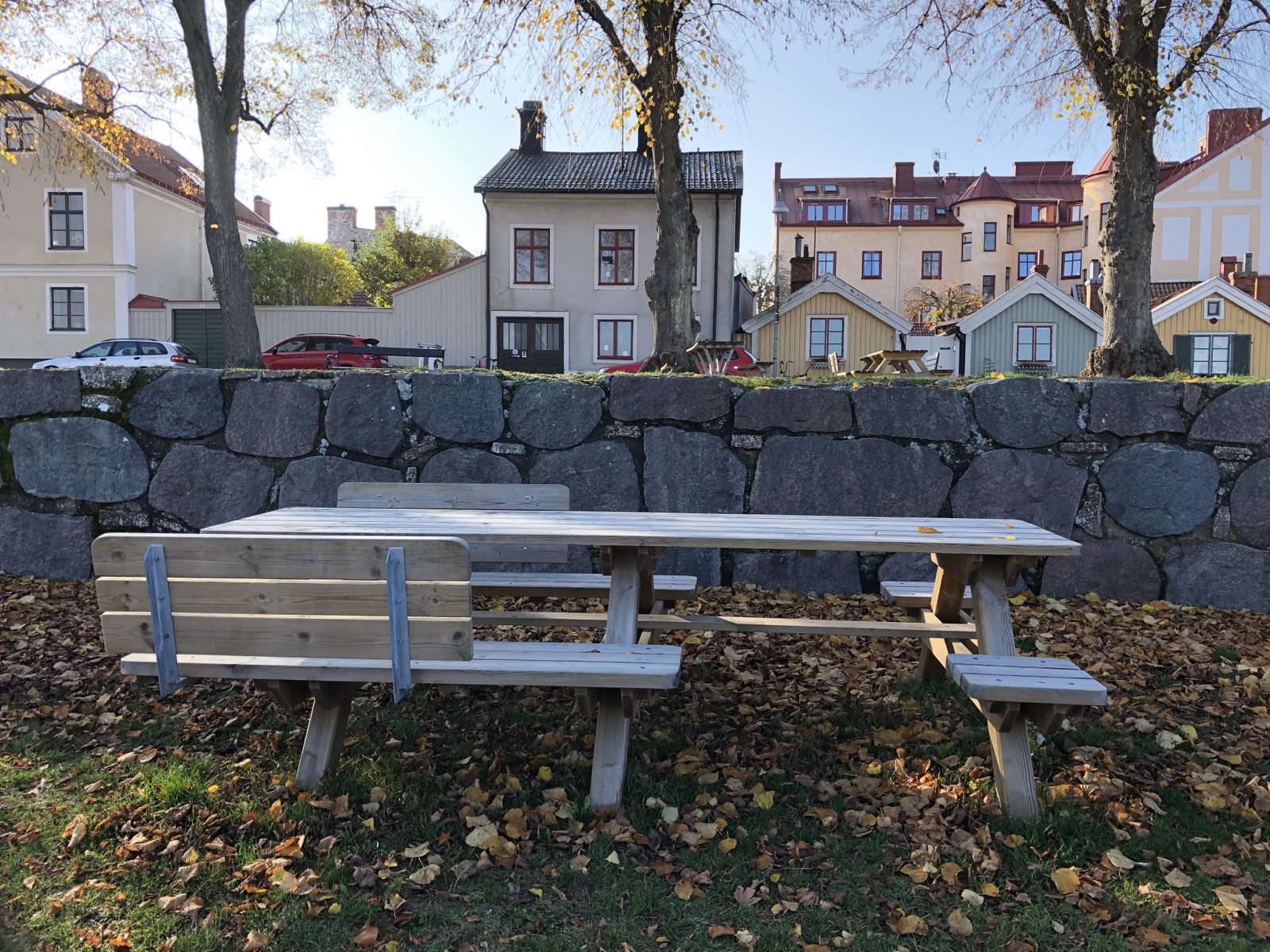
Kalmar, below the old city wall. One table, several ways to sit: backrests here, none there, and two open places facing each other near the middle. Whoever rolls in sits among the others, face to face. Table by KPLN Design AB. Download photo -
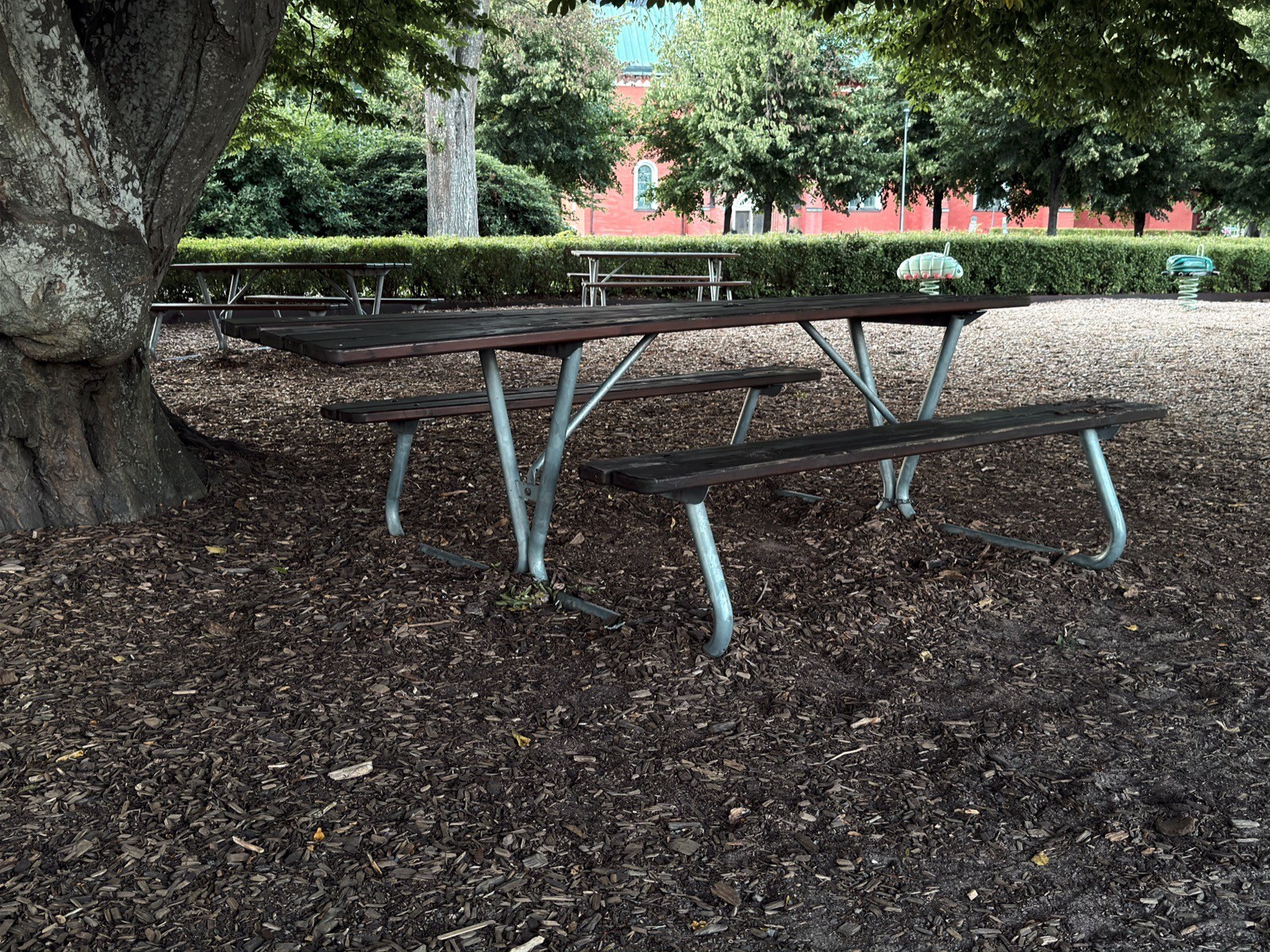
Växjö. The tabletop reaches past the benches, leaving one place with no bench in the way. Download photo -
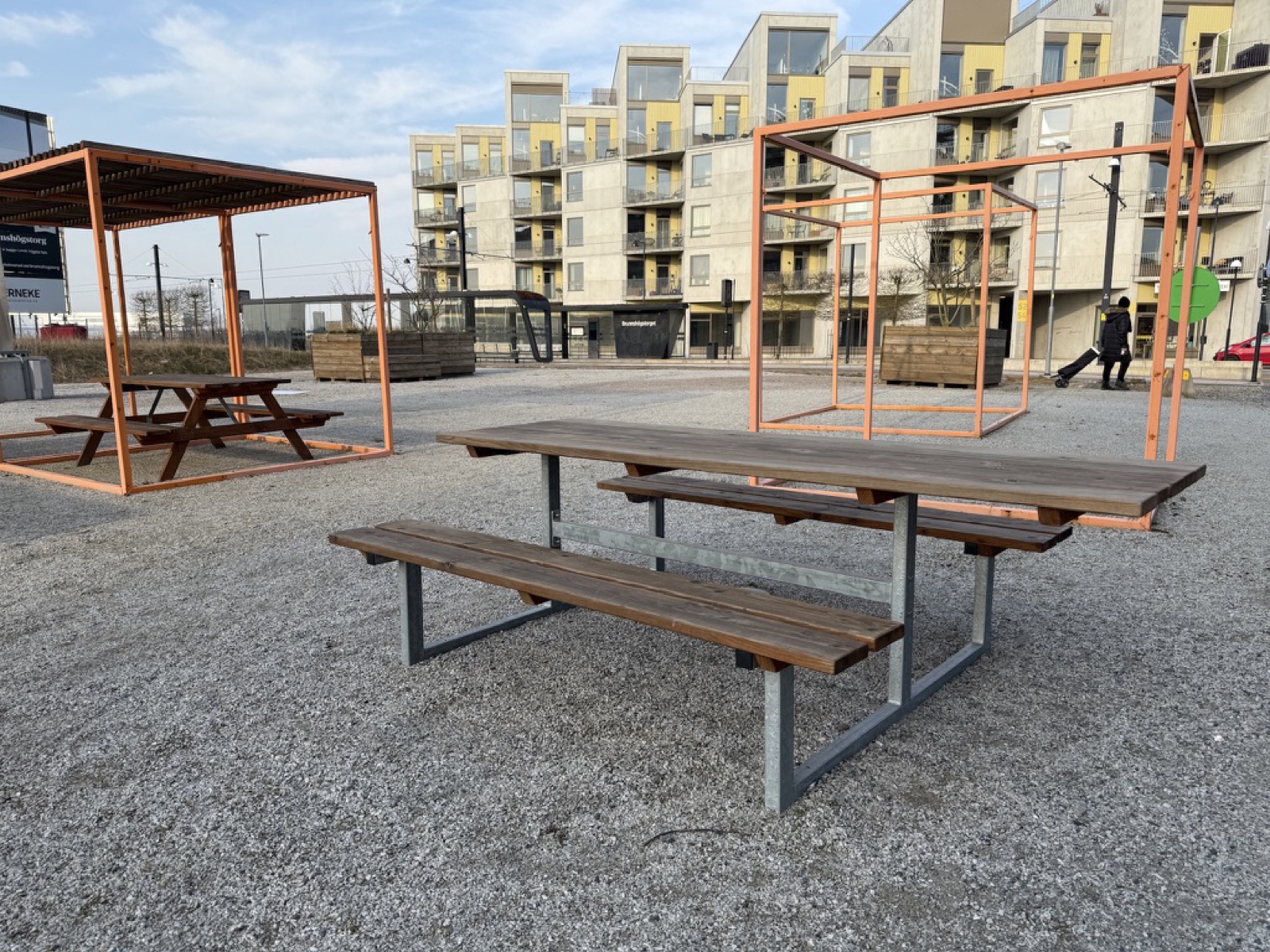
A housing square. The table is longer than its benches at one end, one open place built in without a word. Download photo -
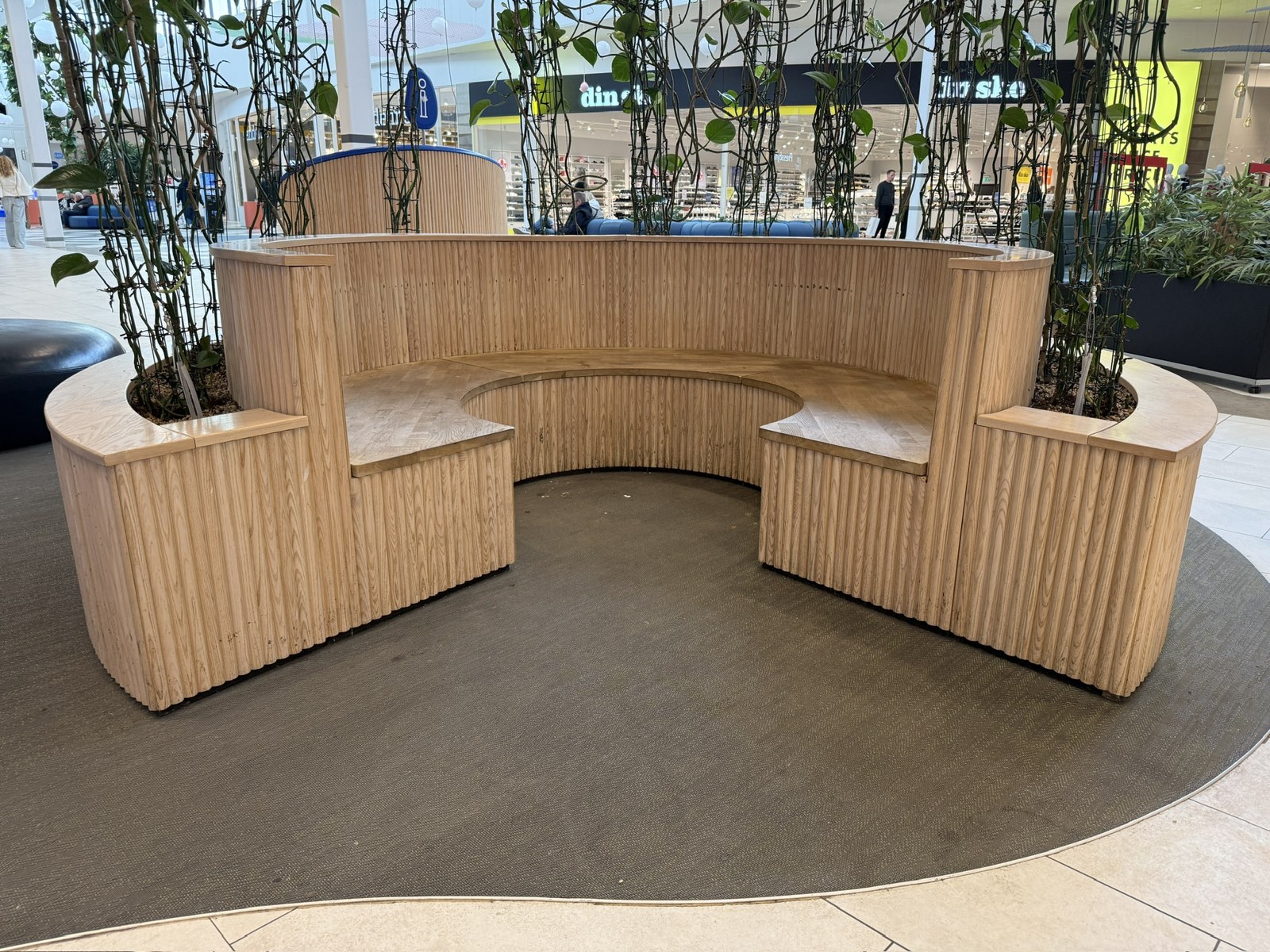
A mall bench built as an open arc. Sit on it, roll into it, lean on it. The open front leaves a place inside the curve. Download photo -
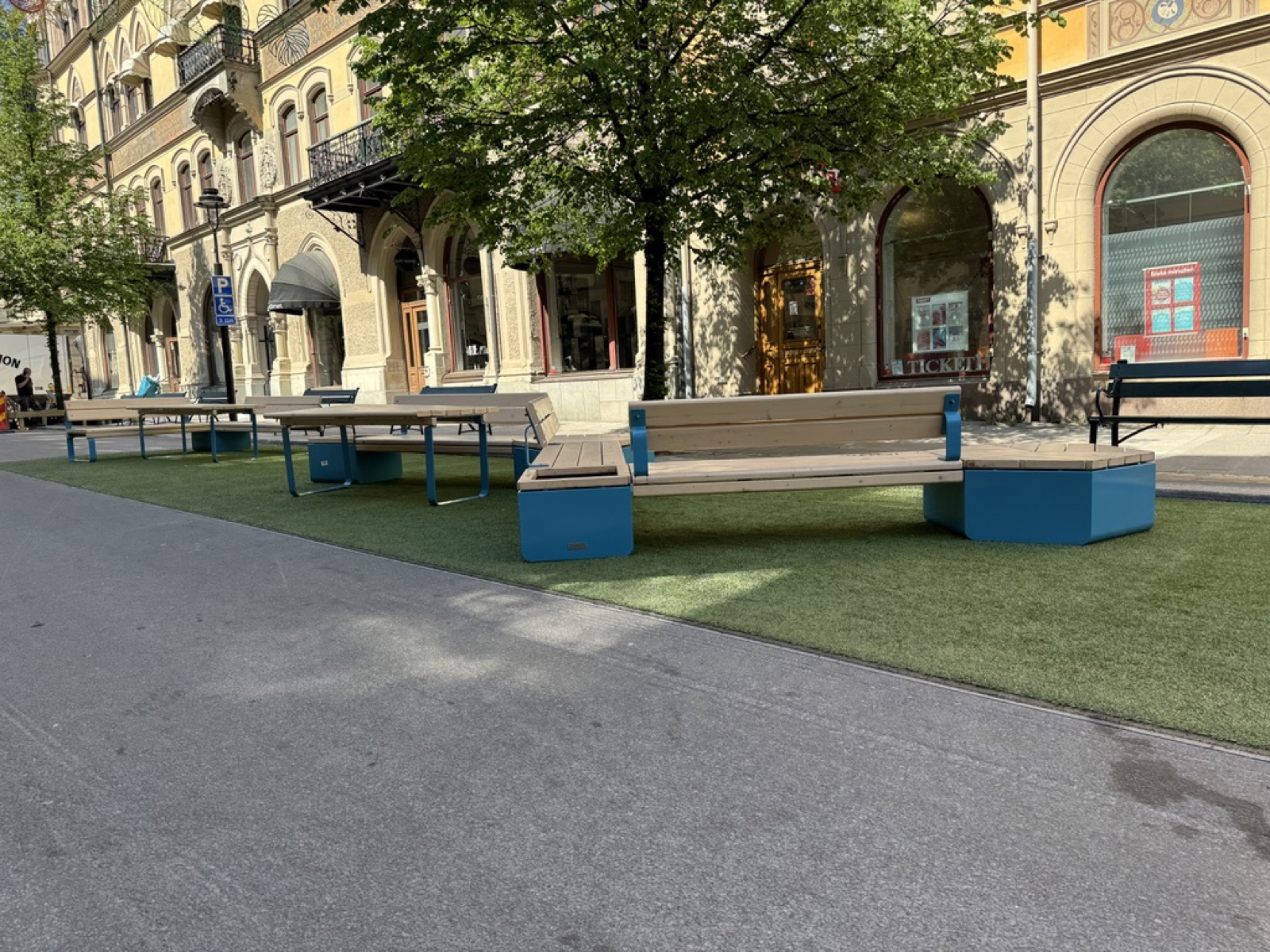
Sundsvall. A summer parklet: benches, tables and boxes on one level floor, open from the street. Download photo -
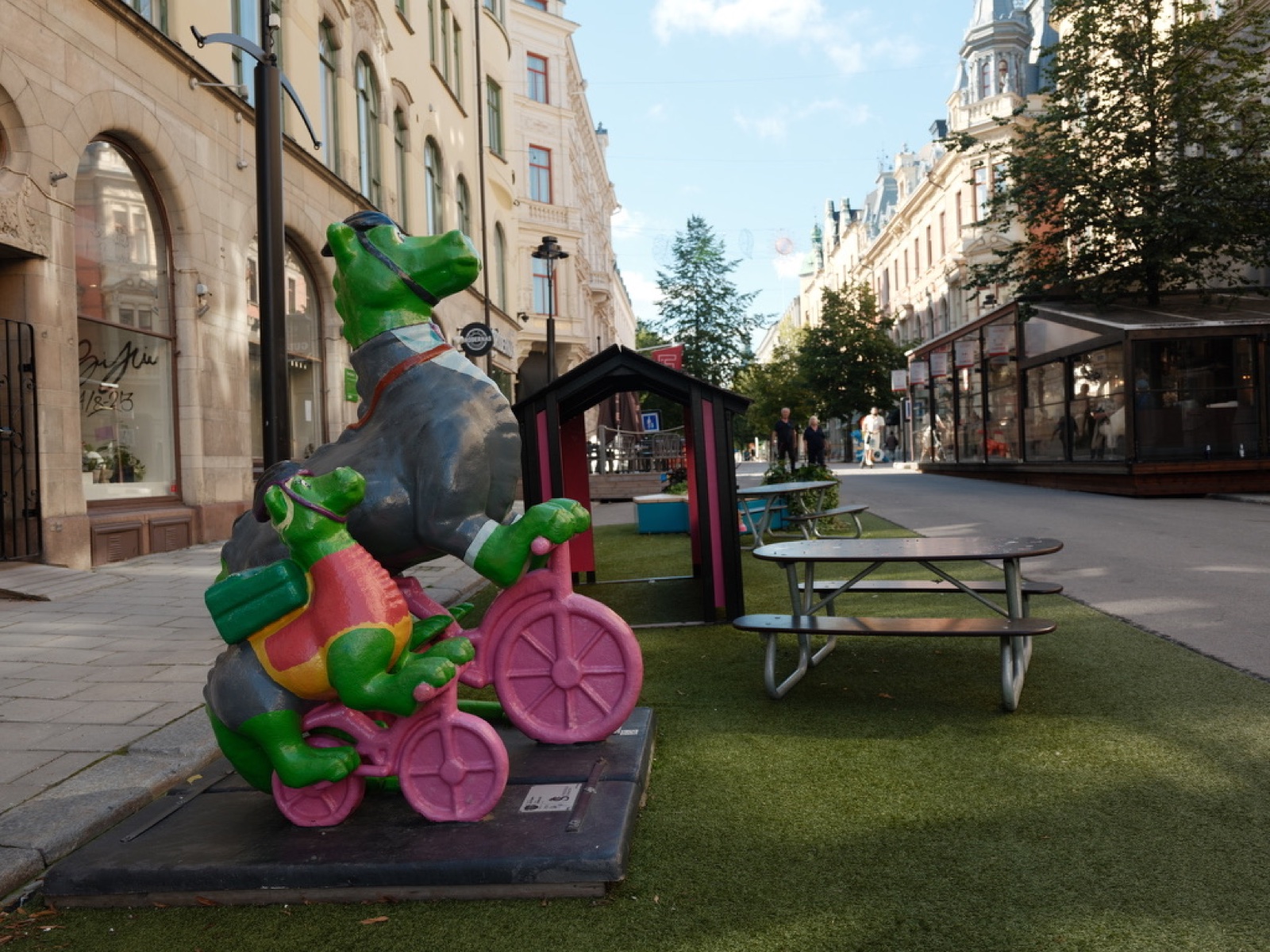
Sundsvall. A street furnished for children. The dragons ride bicycles. Download photo -
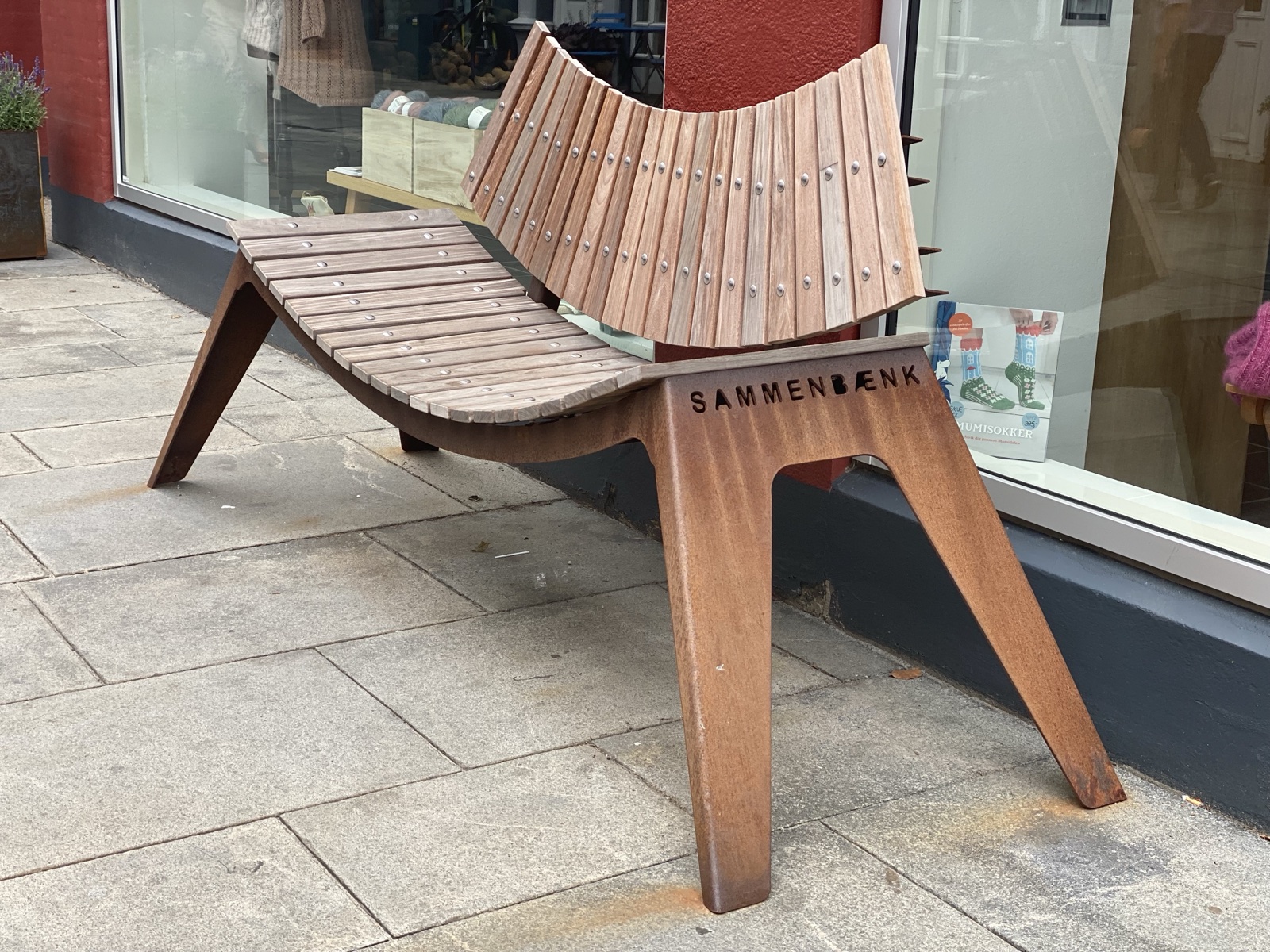
Denmark. Sammenbænk, the together-bench. The seat slopes toward its middle, so sitters slide gently toward each other. The shape decides how close you sit. Download photo -
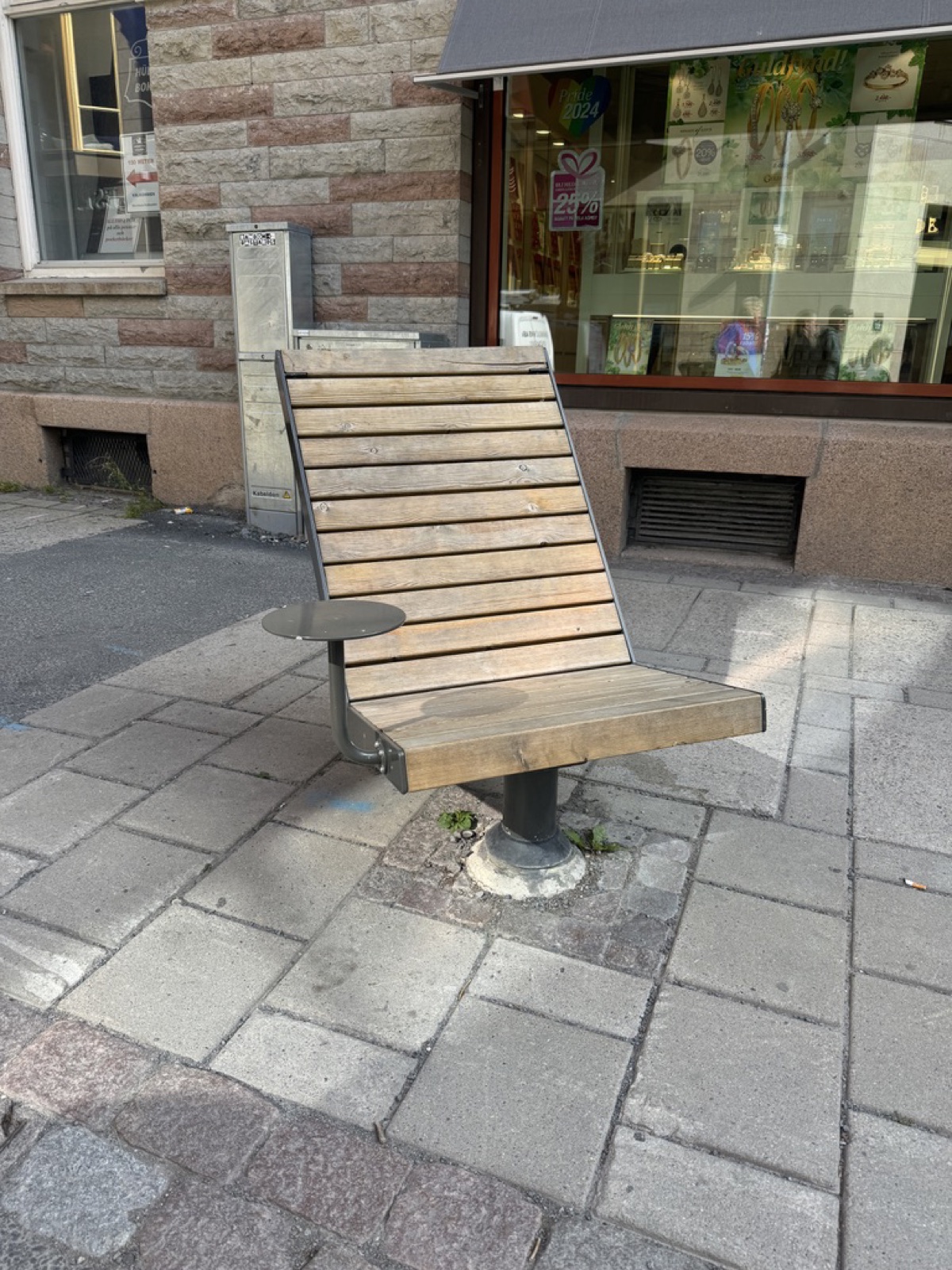
A rest point on the pavement, one seat at a time. Good that it exists. The side table sits on the right, and assumes a right-handed sitter. Download photo -
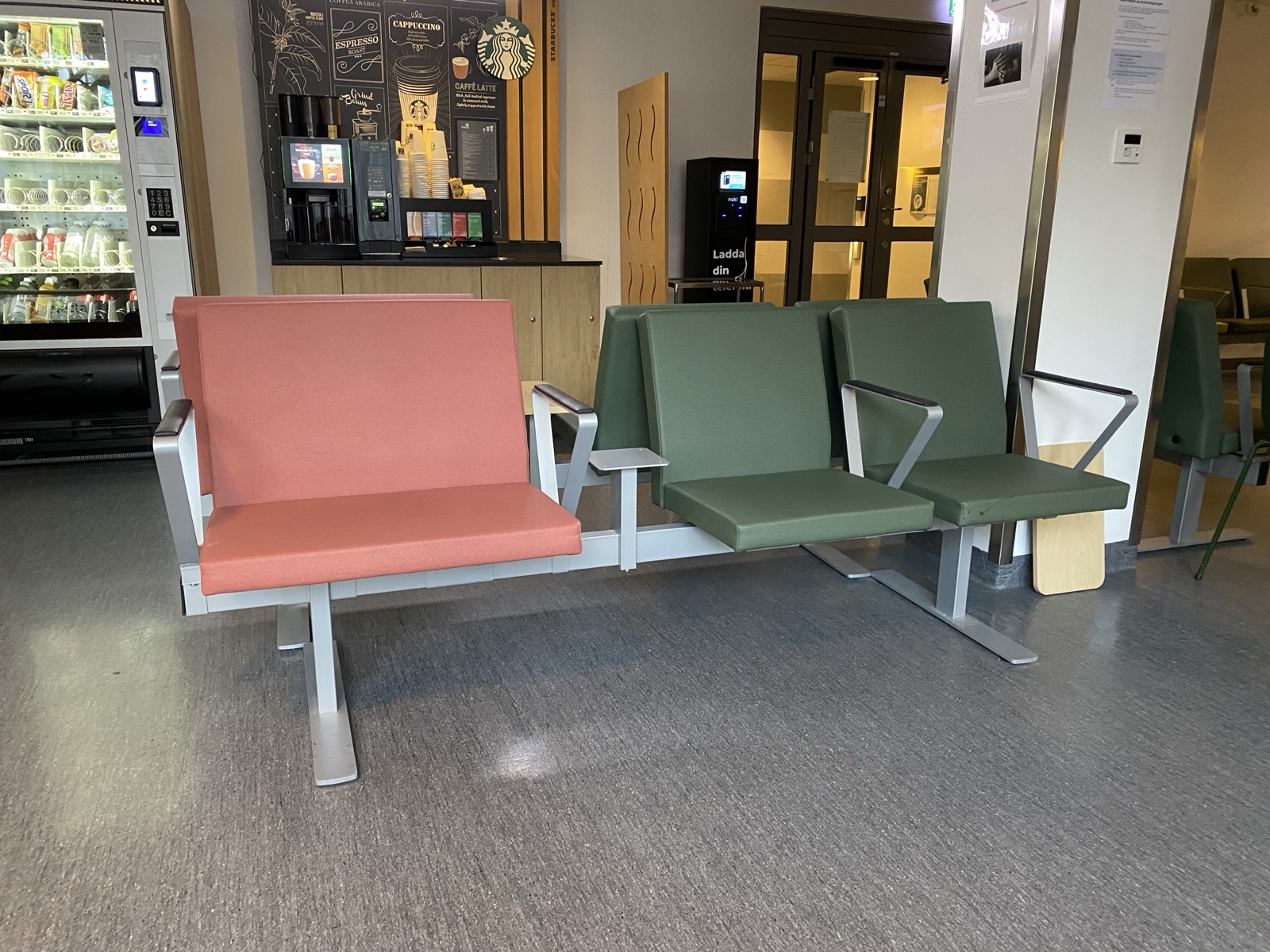
A hospital waiting area. Seats in two widths share one beam, with no sign saying which is for whom. But the wide seat is placed as a single, so using it means sitting alone. Download photo -
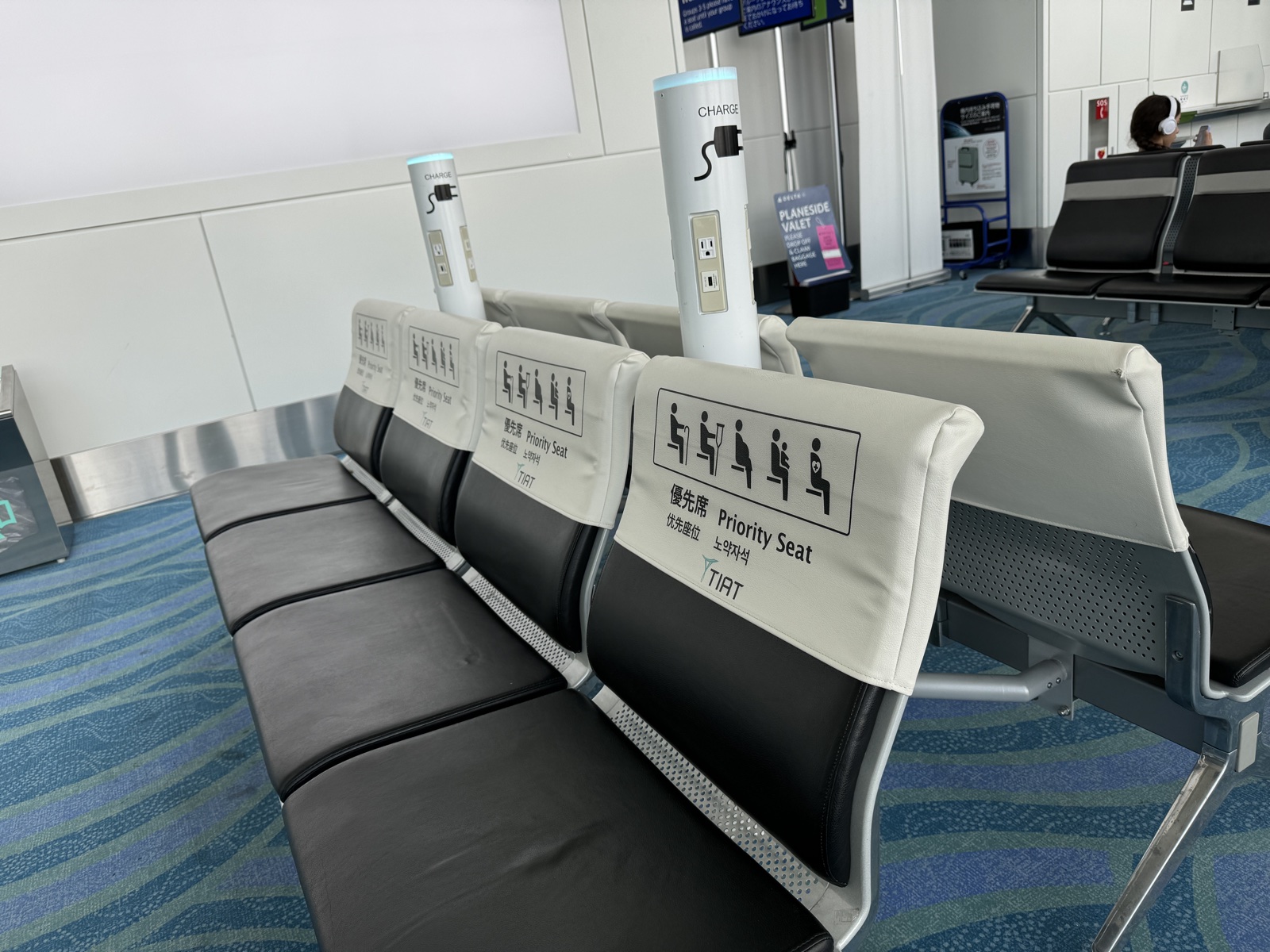
Tokyo. Priority as a slip-on cover, five kinds of person printed on fabric. The seats underneath are all the same. Download photo -
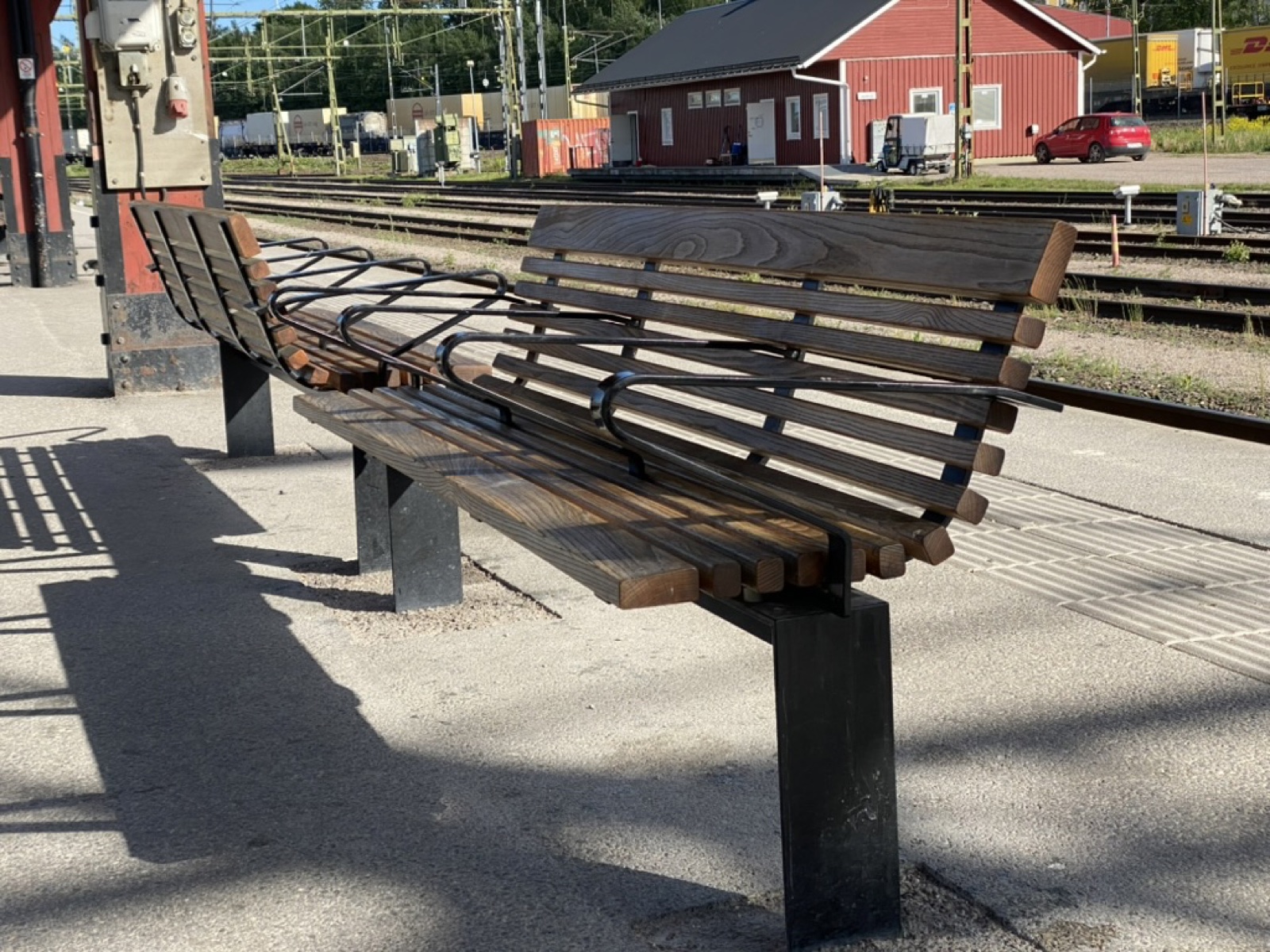
A platform bench with four armrests curving out from the backrest. They make it easier to get up if rising is hard, and impossible to lie down. Download photo
What it is
A seat in public space is a small statement about who is expected to stay. I photograph benches, tables, and chairs because they make that statement in shape rather than words. A table with one open place expects someone on wheels. A bench that circles the table without a gap does not.
The photographs run from seating that holds a place open, through seating that sorts its sitters, to seating built so that nobody can stay long. None of it carries a sign about who it is for.
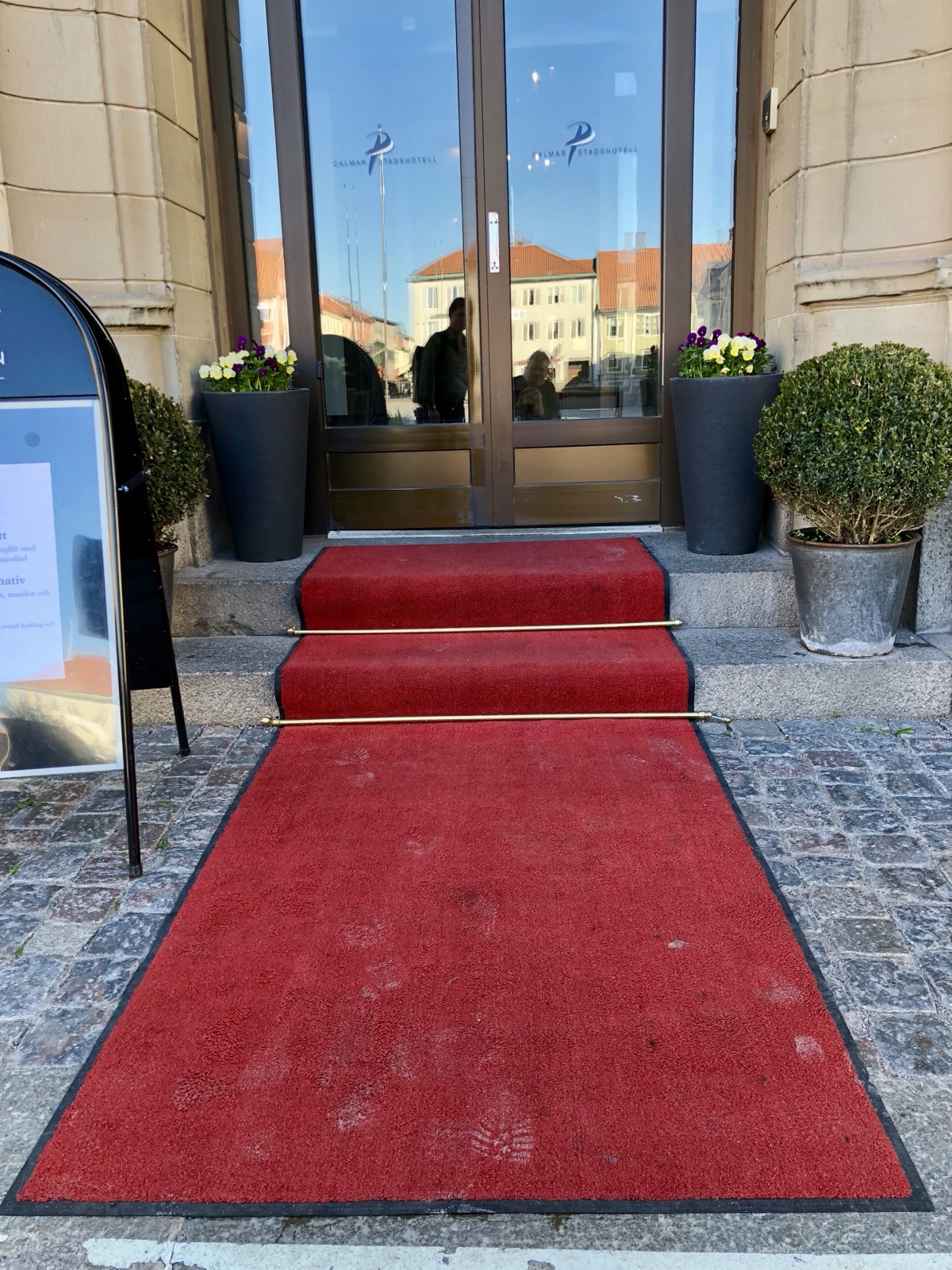
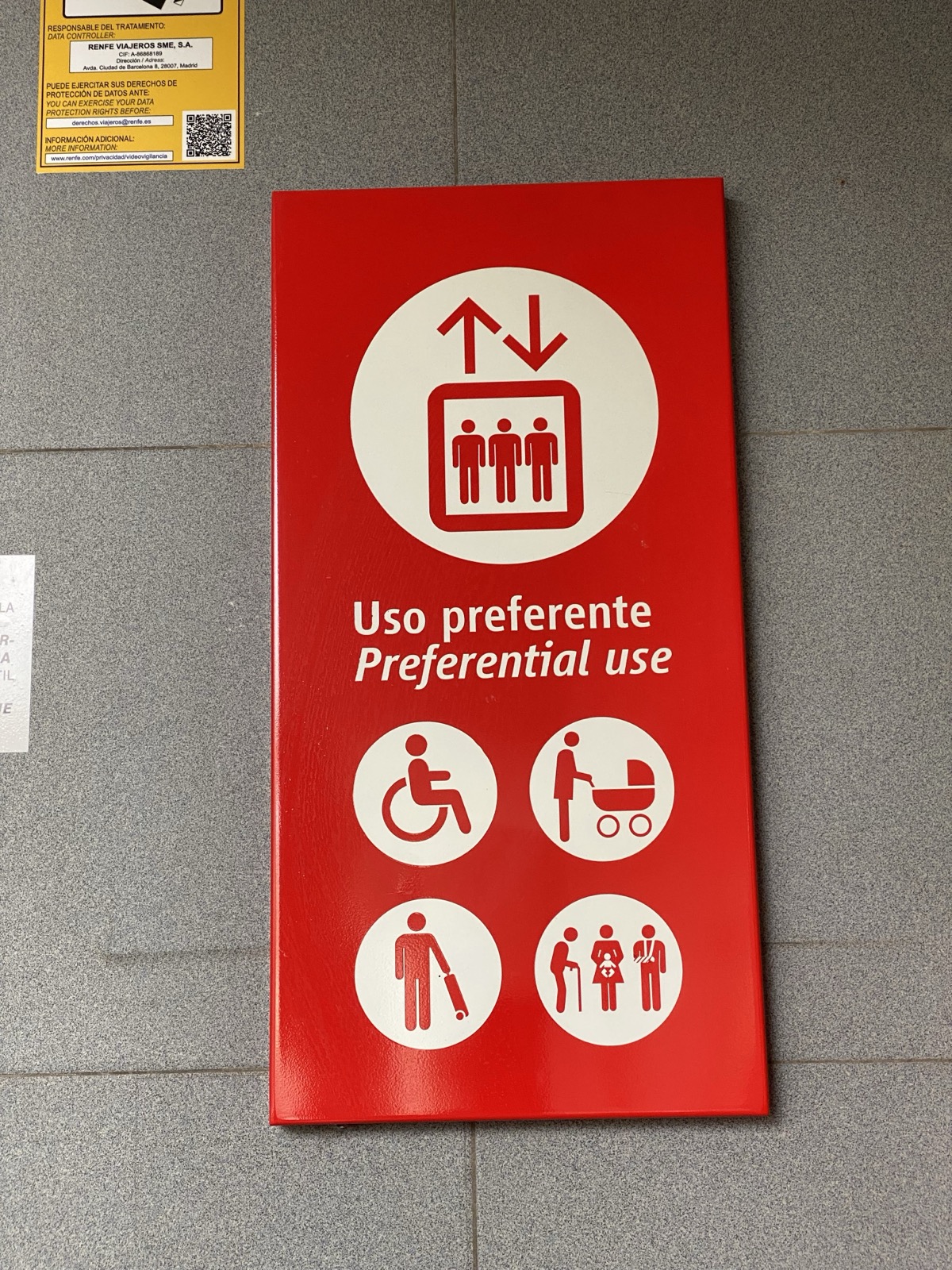
I use these photographs in teaching alongside the red carpets. A carpet laid over stairs shows that a gesture of welcome can shut people out. These benches and tables show that furniture can do the same. The shape decides who gets a seat and who stays outside the circle, without a word or a symbol.
Download
Save any of the photographs above and use them under the license below. If you want an original in full resolution, write to me.
License: Open Educational Resource
Everything I have created here is shared under the Creative Commons Attribution 4.0 International license (CC BY 4.0).
You may:
- Share: copy and redistribute the material in any medium or format.
- Adapt: remix, transform, and build upon the material.
Under the following condition:
Attribution: give appropriate credit and indicate if changes were made. A simple "Per-Olof Hedvall, peohedvall.com" is enough.
This applies only to content I have created. Any third-party content, such as quoted images, may be under a different license and is marked accordingly.