Provtryck Konsekvenserna!
What if accessibility consequences were tested before policies were implemented, the way a print is proofed before the press run?
Pressurise the Consequences!
- Funder
- Formas
- Period
- 2026 – 2028
- PI
- Per-Olof Hedvall (Mid Sweden University)
- Coordinator
- Mid Sweden University (Mittuniversitetet)
- Funding
- Funded by Formas: 2,998,407 SEK of a 4.0 MSEK total (75%, with university co-financing), under Impact Innovation: Geografiska omställningslabb.
What this project is asking
Provtryck Konsekvenserna translates roughly as "pressure-test the consequences." The Swedish verb provtrycka means to stress-test a vessel under load: where does it leak, where does it hold? The project takes that logic and applies it to urban-development proposals.
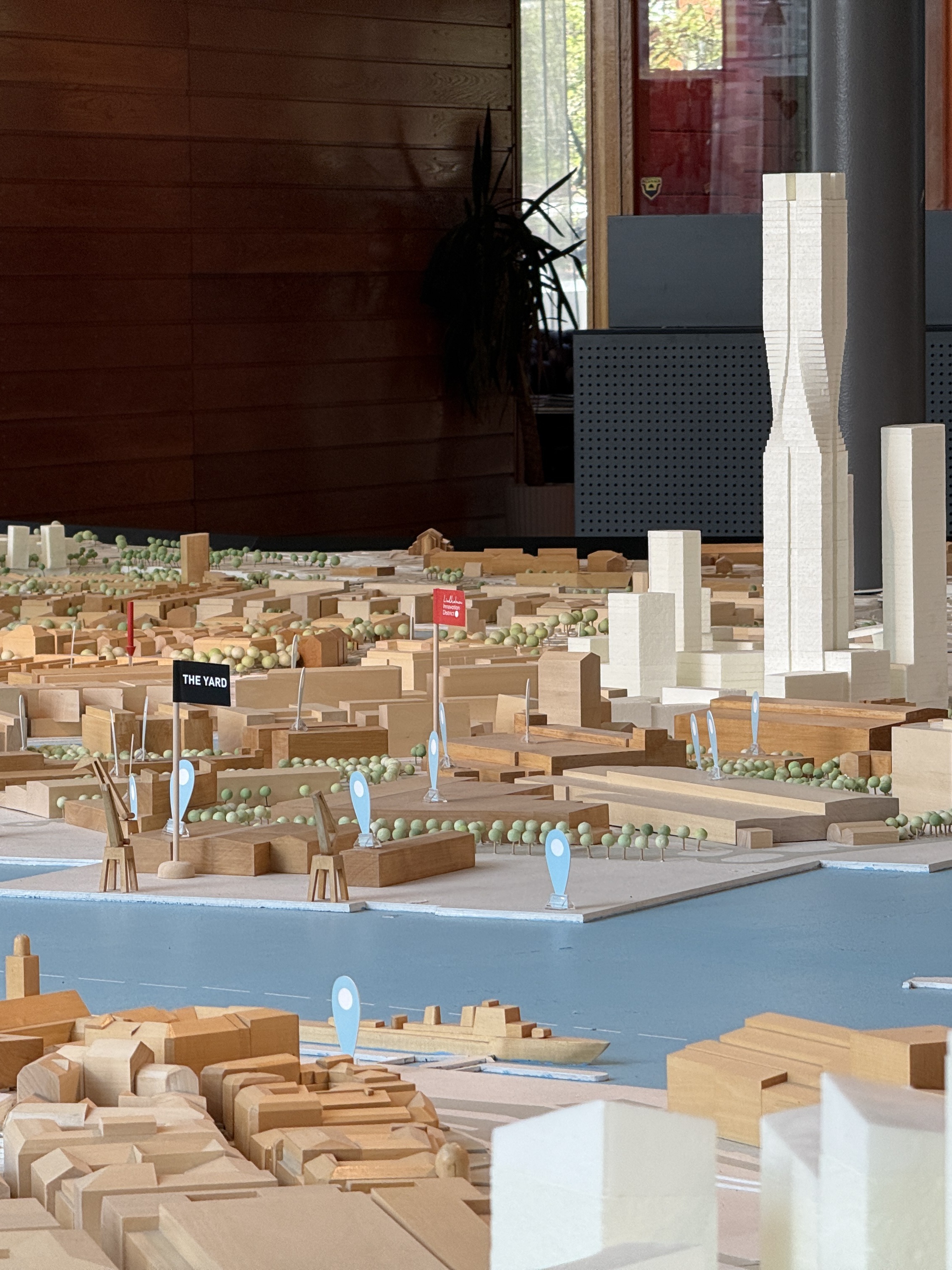
The work happens in the Lindholmen Transition Lab in Gothenburg, inside the city's existing digital twin (Virtuella Göteborg). Together with the city's geodata team, accessibility organisations, Lund municipality, and a consortium of universities and civil-society partners, we are developing lab tools that let civil servants stress-test urban proposals from the perspectives of human diversity, accessibility, usability, and Universal Design. Before things get built.
The application states the starting point plainly: the people a city is planned for already exist and already live their lives there, with different and sometimes curtailed possibilities to move and take part. So the project builds instruments for testing proposals against that human diversity while they are still proposals. The Collingridge dilemma describes how consequences grow cheaper to see and dearer to change as a process advances, and the dilemma as a figure sits among the open resources.
Method
The project asks three research questions:
1. How can a digital twin make visible and evaluate consequences from the perspectives of human diversity, accessibility, usability, and Universal Design?
2. How can a digital twin bridge gaps and goal conflicts between built environment and mobility through the project phases?
3. How can a digital twin be used in citizen dialogue and co-creation?
Conceptual ground: the harmonised model of accessibility, usability and Universal Design (Hedvall, Ståhl & Iwarsson 2025) as the analytical core. The gap model (Müller 2023) for transitions between phases. And Joel Chan's Questions–Claims–Evidence framework, applied in two-day codesign workshops with people whose lived experience makes the edges of the matrix legible.
Partners
- Mid Sweden University (coordinator)
- City of Gothenburg (Stadsbyggnadsförvaltningen)
- Lund University
- University of Gothenburg
- Lund Municipality
- Begripsam AB
- Our Normal Association
Co-investigators
- Stina Ericsson (University of Gothenburg, linguistic and interaction analysis)
- Eric Jeansson (City of Gothenburg, AP1 lead, digital twin)
- Maria Printz, Harald Green (City of Gothenburg)
- Lilian Müller (Lund Municipality, AP3 lead)
- Ida Sandström, Charlotte Magnusson (Lund University)
- Stefan Johansson (Begripsam, cognitive accessibility)
- Jenny Lindström Beijar (Our Normal Association)
Planned outputs
- Lab tools delivered to the City of Gothenburg as a working component of Virtuella Göteborg
- Recommendations and experiences from the work with and in the digital twin
- Three scientific articles