Visualisering för Trygghet och Tillgänglighet
Can a place be made safe without sorting people into the protected and the threatening?
Visualisation for Safety and Accessibility
- Funder
- Formas
- Period
- 2026 – 2029
- PI
- Per-Olof Hedvall (Mid Sweden University)
- Coordinator
- Mid Sweden University (Mittuniversitetet)
- Funding
- Granted in full by Formas: 7,494,988 SEK (support rate 93%, with Begripsam co-financing). Decision 2026-06-16, call Trygga rum.
What this project is asking
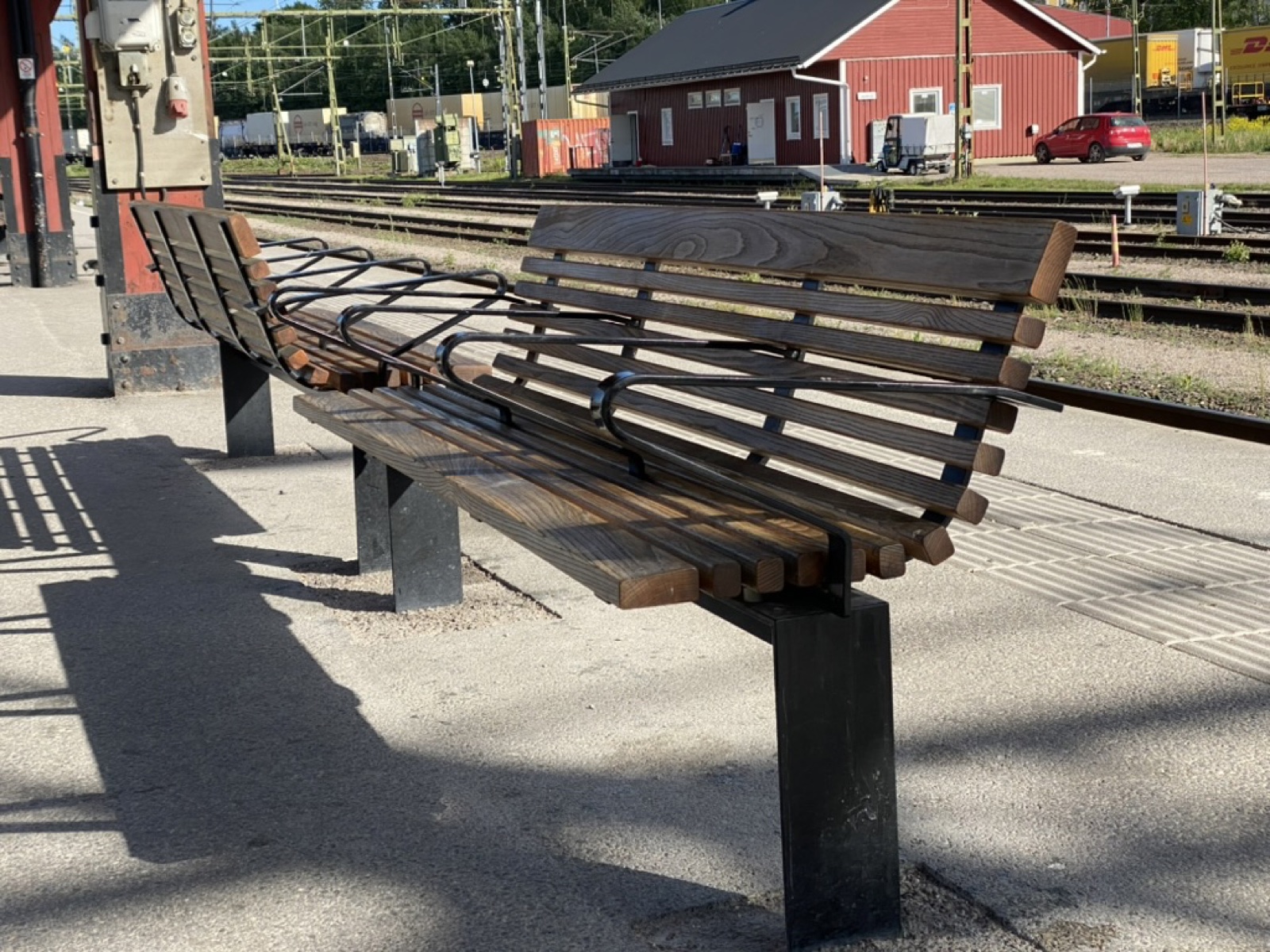
Safety-oriented design in the built environment rests on an unexamined premise: that safety is made by identifying and managing threats, which means sorting people into those worthy of protection and those who threaten. Since the 1960s this logic has produced a whole toolkit, from "eyes on the street" to defensible space to CPTED. It also produces benches you cannot lie down on, studs under bridges, armrests that break a seat into single places. Such measures can make a place feel safer for some by shutting others out. And the ones shut out are often already among the most exposed.
Visualisering för Trygghet och Tillgänglighet asks whether safety in public space can be created without that sorting. It also takes up a connection that is rarely made: accessibility is itself a safety question. If you use a wheelchair and cannot get away, if you have low vision and cannot orient, if you have a cognitive impairment and cannot read what is happening around you, then an inaccessible environment is not merely hard to move through. It is unsafe. Not being able to flee, ask for help, or perceive danger are concrete safety deficits. Yet safety and accessibility are usually kept apart, handled by different parts of an organisation. In a municipality they typically sit in different units, with different budgets and different professional languages. In practice they can even work against each other: safety measures are sometimes created by making a place inaccessible for certain groups. The project turns that relation around, so that accessibility is treated as an aspect of safety.
The third move is the nonclusive one: safety that arises because everyone already belongs, rather than safety that is bought by keeping some people out. The project calls this nonclusive safety-creating design, and treats not belonging as perhaps the deepest form of insecurity there is.
Method
The project is co-creative action research in the City of Gothenburg, using the city's digital twin as a laboratory. It asks three research questions, organised in four work packages, over three years (2026–2029).
1. How do safety discourse and policy documents categorise people as threatening or worthy of protection, and what does this do to different groups' belonging in public space? (AP2, critical discourse analysis of national and municipal steering documents.)
2. How can a digital twin make visible and evaluate safety from the perspectives of accessibility, usability, and Universal Design, where inaccessibility is understood as a safety deficit in itself? (AP1 builds the lab tools. AP3 leads the co-creation.)
3. How can safety-creating design be developed through nonclusive design, without excluding certain categories of people? (AP4.)
Three groups of "extreme users" (people with disabilities, older people, people in social vulnerability) are recruited through Begripsam and, with city officials and researchers, visit at least ten Gothenburg sites that succeed or fail at combining safety and accessibility. Visits are documented with photos, sound, 360 cameras and eye-tracking, then reworked in design workshops that alternate "Mode A" (safe and accessible for everyone) and "Mode B" (someone is excluded) inside the twin.
Partners
- Mid Sweden University (coordinator)
- University of Gothenburg
- City of Gothenburg (Stadsbyggnadsförvaltningen)
- Lund Municipality
- Begripsam AB
Co-investigators
- Stina Ericsson (University of Gothenburg, AP2 lead, critical discourse analysis)
- Eric Jeansson, Maria Printz, Harald Green (City of Gothenburg, AP1, digital twin)
- Stefan Johansson (Begripsam, AP3 lead, cognitive accessibility, participatory methods)
- Lilian Müller (Lund Municipality, safety and accessibility in urban development)
- Per-Olof Hedvall (Mid Sweden University, AP4, nonclusive design)
Planned outputs
- Lab tools in Gothenburg's digital twin for simulating and evaluating safety from different user perspectives
- A critical discourse analysis of how Swedish safety steering documents create categorisations and their consequences
- A conceptual model for nonclusive safety-creating design, with principles for safety without exclusion
- At least three articles in international journals. Dissemination via the DigiDig network of close to 50 municipalities and universellutformning.se