Kategorisering som stödjer implementeringen av universell utformning
An inclusive, equal accessibility that is meant for everyone cannot keep putting wheelchair signs on the door. So how does categorisation work, and what would a non-stigmatising alternative look like?
Categorisation Supporting the Implementation of Universal Design in Sweden
- Funder
- VINNOVA
- Period
- 2019 – 2020
- PI
- Per-Olof Hedvall (Lund University, Certec)
- Coordinator
- Lund University (Certec, Department of Design Sciences)
- Funding
- Funded by VINNOVA: 7,023,322 SEK (total planned), under Accessibility Design 2018.
What this project is asking
KatUU is where the categorisation thread in my work was first funded, and much of what came after grew out of it. Sweden was moving to make Universal Design the main principle for everything newly created in society. That move creates a tension between two ways of thinking and categorising: an inclusive, equal accessibility that is meant for everyone cannot, at the same time, keep carrying signs with wheelchairs on them. Categorisation is basic to human life, and it is also basic to inequality and discrimination, which rest on dividing and valuing people differently.
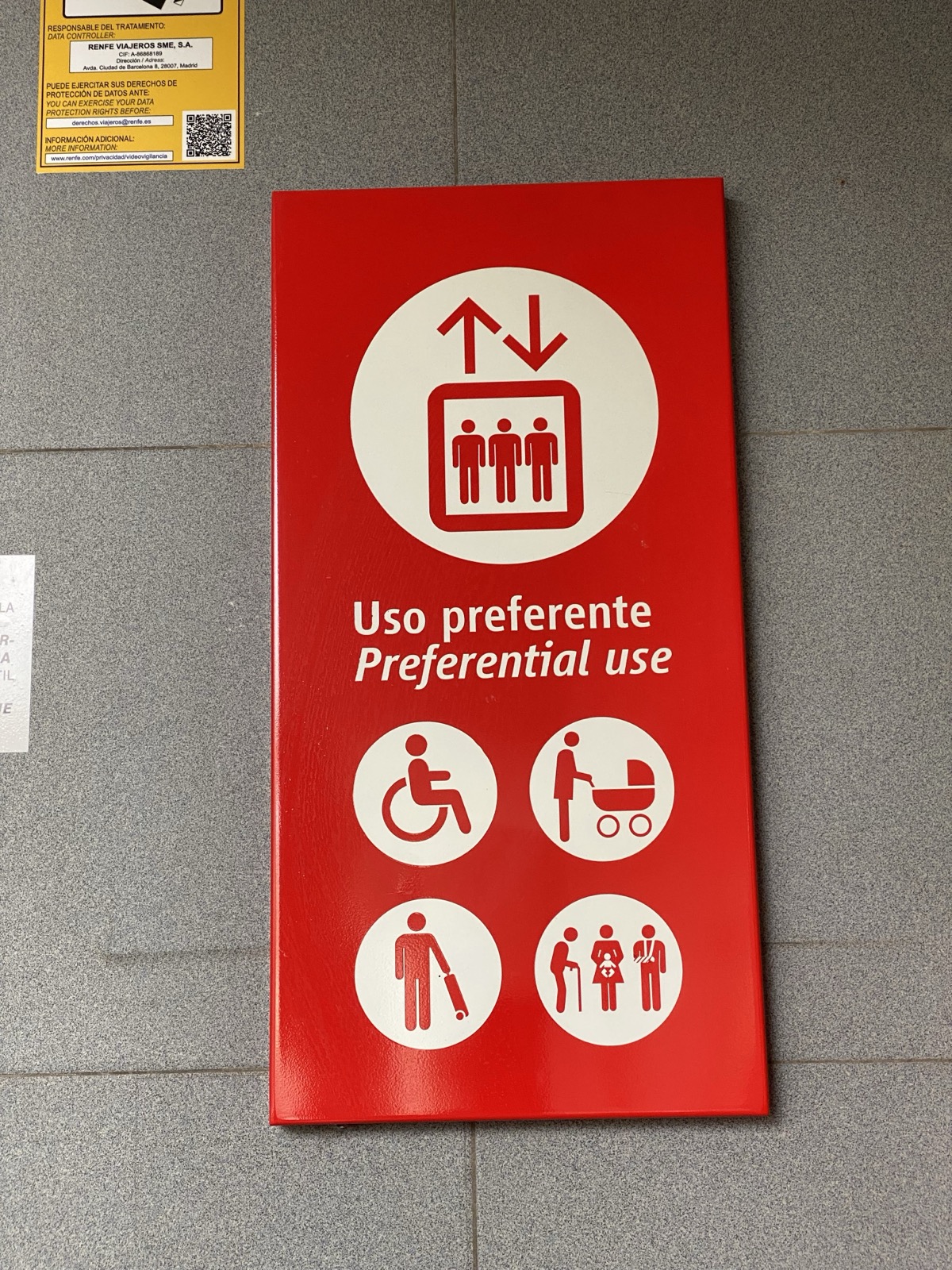
The project set out to understand how categorisation actually works, how it produces inequality, how people push back with alternative categorisations, and how categorisations could be made that do not lead to stigma or set groups against each other. The running example was the sign: signs that, together with buildings and spaces, sort and steer people, which entrances, toilets, parking places or train compartments may be used by whom. If you simply remove the wheelchair symbol from a door opener, the design often becomes harder to understand. The harder, more interesting question is what a different basis for categorising would be: perhaps the button should show what it does when you press it, rather than which kind of person is allowed to press it.
The work was deliberately cross-disciplinary, joining design sciences, disability studies, linguistics, and gender and sexuality studies, because categorisation lives in written and spoken language and in physical space at once.
Method
A two-year project with a parallel, convergent design with three substudies, led by me in close collaboration with Stina Ericsson.
Substudy 1 (categorisation in texts) analysed linguistic labels such as "person with disability" or "cis person" using the Swedish language bank Korp together with policy and research texts, combining corpus analysis and critical discourse analysis, including historical material to show how categorisations work over time.
Substudy 2 (categorisation in physical space) used a citizen-science approach, inviting the public to share photos and comments on categorising signs in public space, complemented by researcher-led data walkshops. This is the substudy that seeded the wheelchair-sign corpus and the citizen-science method I still use.
Substudy 3 (categorisation at and in Universal Design) brought selected cases from the first two into workshops, looking for non-stigmatising alternatives that are in line with Universal Design.
Partners
- Lund University (Certec, Department of Design Sciences)
- University of Gothenburg (Department of Swedish)
Co-investigators
- Stina Ericsson (University of Gothenburg, language, interaction and categorisation)
- Lilian Müller (Lund Municipality, accessibility. Industrial PhD student at Certec)
- Daniel Wojahn (linguistics. Language, activism and discrimination)
Outputs
- A knowledge base on how categorisation in language and space limits and creates access to society, intended to inform policy and guidelines
- Ericsson, Wojahn, Sandström & Hedvall (2020), Language that supports sustainable development, Sustainability 12
- The wheelchair-sign corpus and the citizen-science photo method that continue in my visual fieldwork
- The categorisation argument that became the first of the three breakthroughs behind nonclusive design
- The first study of Lilian Müller’s doctoral thesis Bridging the Gaps (2023): her Paper I, Young, Mobile, and Highly Educated Cyclists (SJDR 2021), grew from KatUU’s study of how accessibility and Universal Design are described in municipal planning