Hi there 👋 I was recently in Denmark to be inaugurated as a Bevica Guest Professor in Universal Design at the Kolding School of Design. I went there together with my family, and we also had a full day at LEGO House in Billund.
What Happens When the Accessible Option Is the Default?
This newsletter edition is a sibling to my previous piece on “What if we leave the circle open?”, which was about always having an open seat for someone to join, and how this supports the flow of people’s interaction. What made those seating examples flexible was what wasn’t there: closed circles or marked, separate “accessible” seats.
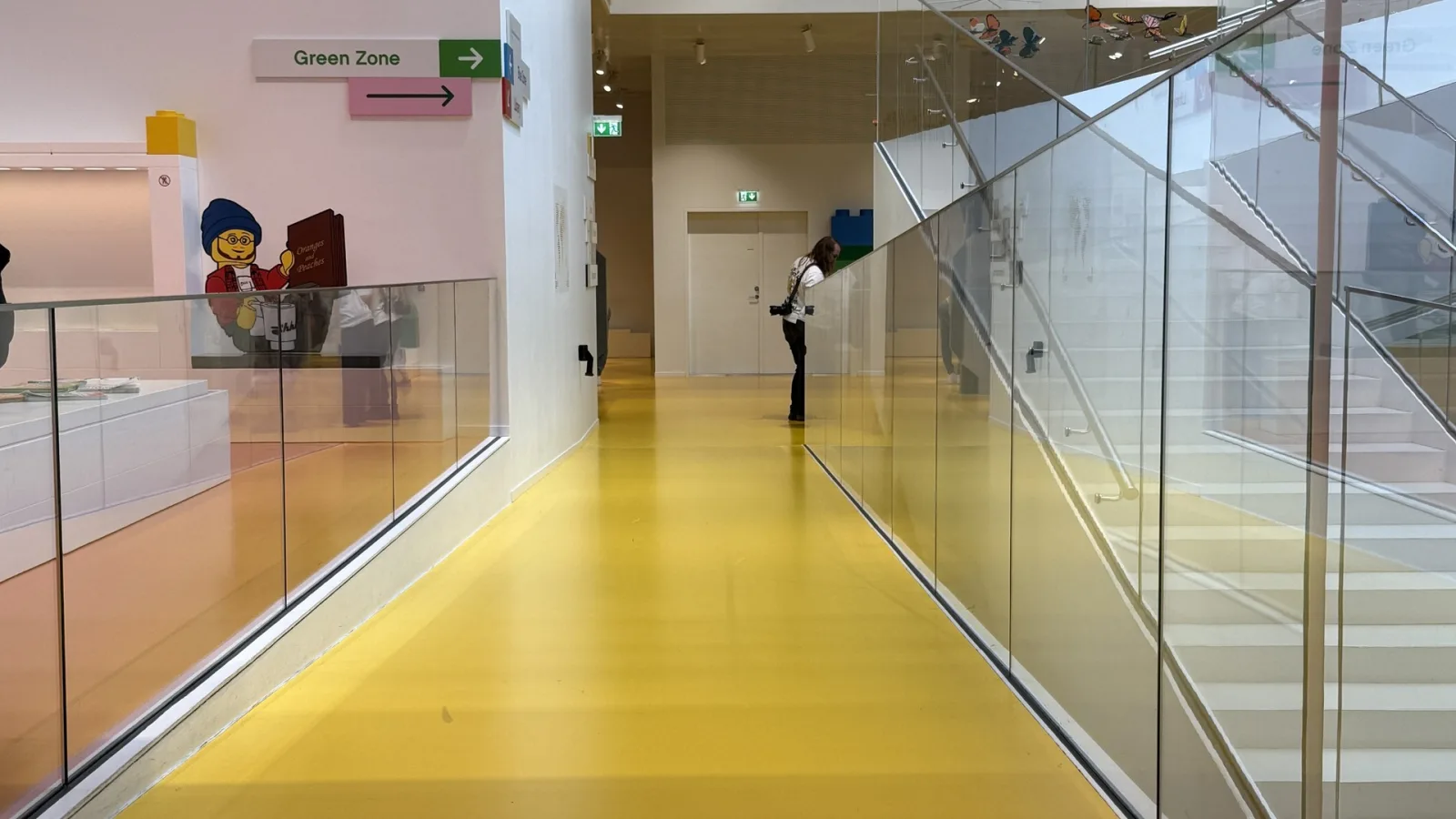
At LEGO House, I was struck by another thing that wasn’t there: the divisions between people using standard stairs and people using separate ramps. In this case, the ramp was the default (Figure 1). This was how the house was organised, with the ramp as the main route that everyone used, connecting the zones on each floor.
I’ve used a wheelchair for almost forty years, and I’m used to the opposite. The house’s design made it effortless for me and my family to navigate around, as we did not once have to look for the accessible path beside the inaccessible main one. The accessible path was the main one.
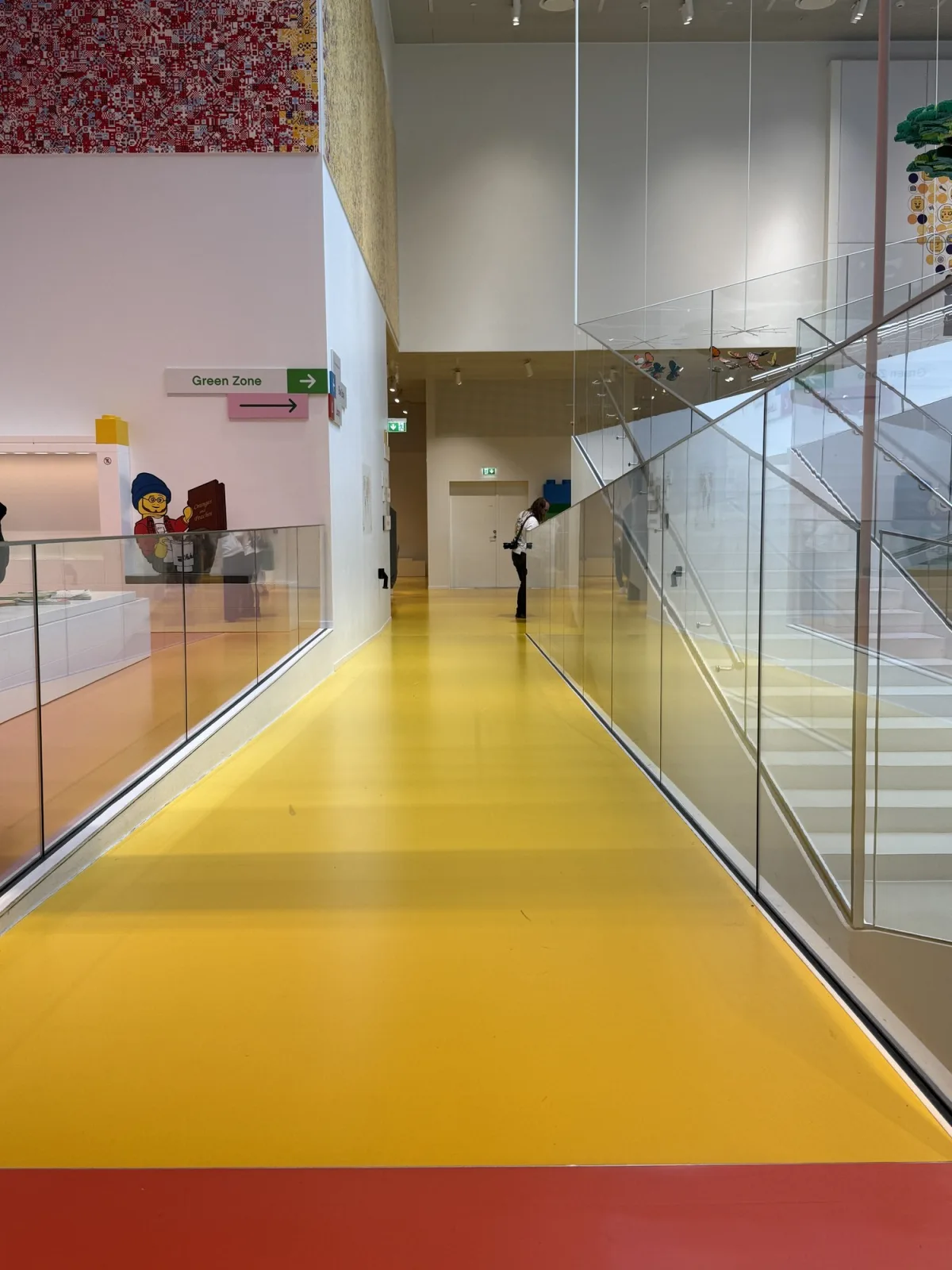
Figure 1. The Yellow Zone at LEGO House. The floor is a ramp rising toward the viewer, and behind the glass on the right the staircase rises the other way. The building is by BIG (Bjarke Ingels Group).
Already, Unmarked and Remarkable – Noticing What’s Not There
At LEGO House, there were many small touches that supported people exploring with LEGO without saying anything about who something was for. Not a single one of them was marked or framed as designated for separate groups. Visitors could move them around to reach better or to make them part of the play. Three examples:
- A loose step box with two heights that could be moved around as needed (Figure 2).
- Cushions stacked on the low borders around the Duplo train landscape (Figure 3).
- Extra surfaces that you could place along the edge of the brick pool, depending on how you could reach (Figure 4).
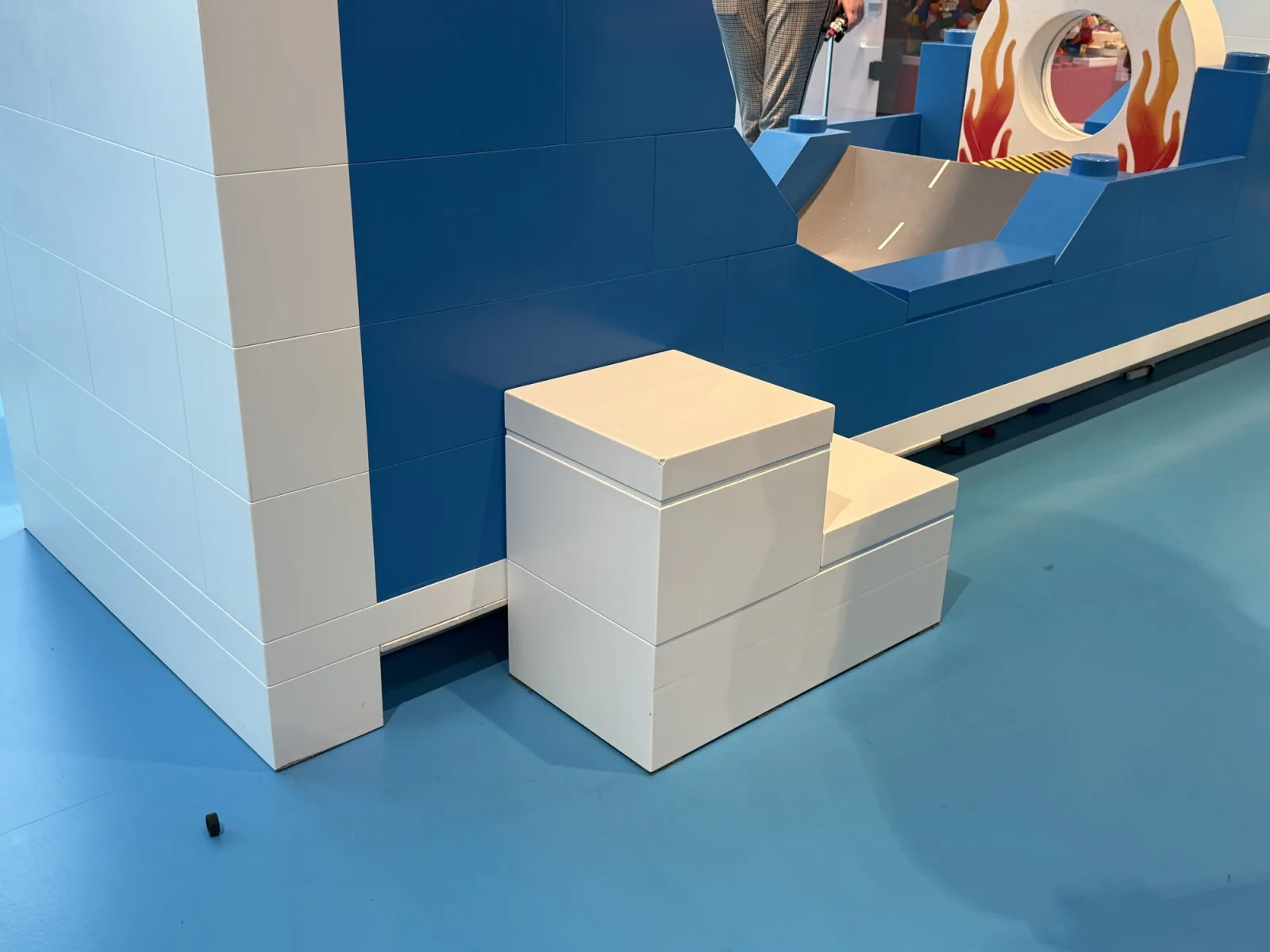
Figure 2. A loose step with two heights, made in the same white brick style as the wall beside it.
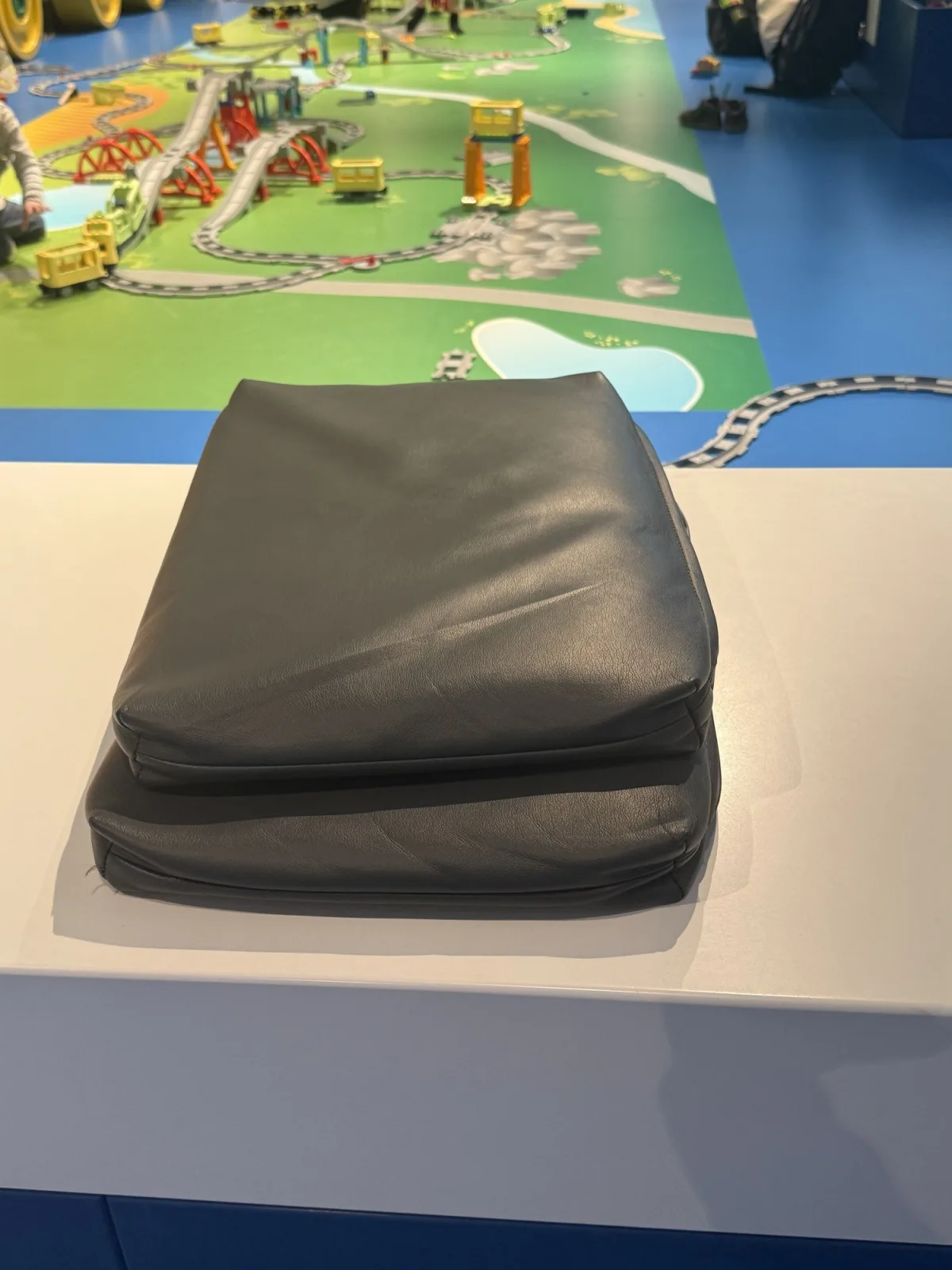
Figure 3. Two cushions stacked on the white border around the Duplo train landscape.
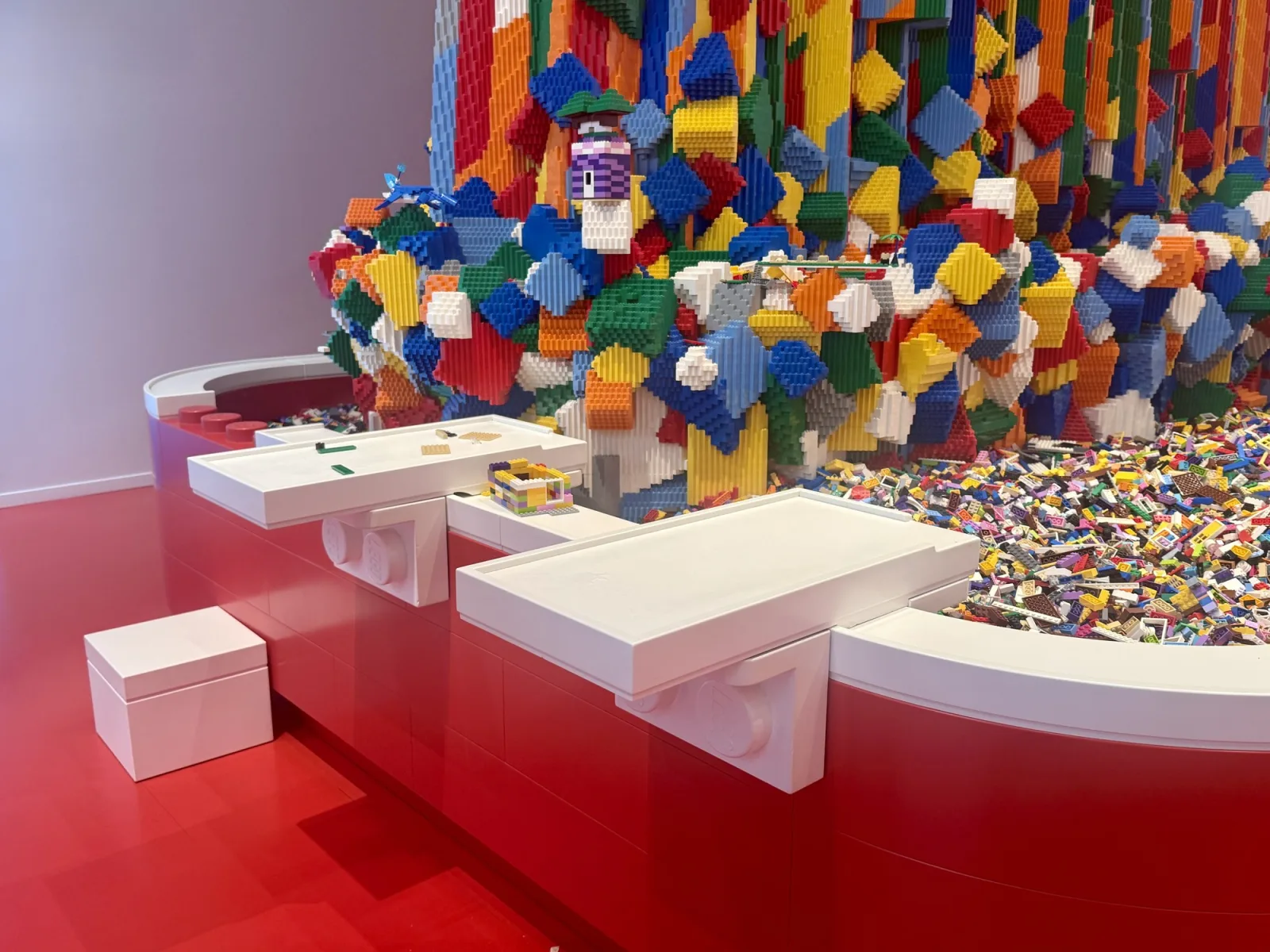
Figure 4. Two white trays on the edge of a pool of loose bricks in the Red Zone, with a loose box on the floor beside them.
The ramps, the step boxes, the cushions and many other details all contributed to everyone’s flow. But what wasn’t there? The separation. The feeling of being highlighted as a special case. Instead, the environment met human variation with spatial variation. The house itself never stood in our way. Its design felt like a gentle hand at your back, acknowledging and supporting diversity without dividing people into different categories. Unmarked and remarkable.
This is what nonclusive design looks like in practice [1]. No separate solutions for certain groups. No special routes. The only wheelchair pictograms I saw in the whole building were on the toilet doors, and those doors said “Everybody toilet”. We were already anticipated before we stepped through the entrance. The experience was one of “already”, which is rare.
And What About You?
Examples like these, which already meet variation with variation, exist. They are still few and far between. I collect them 😊
Have you come across a place where the accessible path was simply the main one? Let me know in the comments below.
Notes and References
This piece builds on findings from our research on situation-based categorisation and nonclusive design through citizen science and field observations.
I took the photos, and LEGO House graciously permitted me to use them.
Do you want to use the photos or illustrations? Please feel free to do that, and tell me about how you use them and what you learn! All the photos are available to download on my website at https://peohedvall.com. 👍
References:
- Hedvall, P.-O., Price, M., Keller, J., & Ericsson, S. (2022). Towards 3rd Generation Universal Design: Exploring Nonclusive Design. Transforming Our World through Universal Design for Human Development, 85–92. https://doi.org/10.3233/SHTI220824